
- Integrating real customer audio testimonials into podcast mid-roll placements helps brands build authentic connections and overcome auditory fatigue through the psychological power of social proof.
- Podcast mid-roll ads deliver a superior 0.35 percent visitor rate, making them the most effective position for showcasing customer success stories to drive higher conversion rates.
- Sourcing high-quality audio reviews through dedicated recording widgets and remote interview platforms ensures that user-generated content meets professional production standards for a seamless listener experience.
- Combining host-read endorsements with authentic customer voices creates a trust halo that yields a 68 percent higher brand recall rate compared to standard pre-recorded advertisement spots.
The podcasting world is undergoing a significant transformation as listeners move away from polished and scripted advertisements. People are becoming increasingly desensitized to standard commercial spots that feel disconnected from their daily lives. Incorporating the genuine voices of real customers helps break through this auditory fatigue by offering something truly human.
Trust remains the most important currency in the digital audio space today. Listeners crave authentic connections and narrative-driven content that feels personal rather than transactional. Strategic audio-based social proof in mid-roll placements leverages psychological trust to drive higher conversions for your brand.
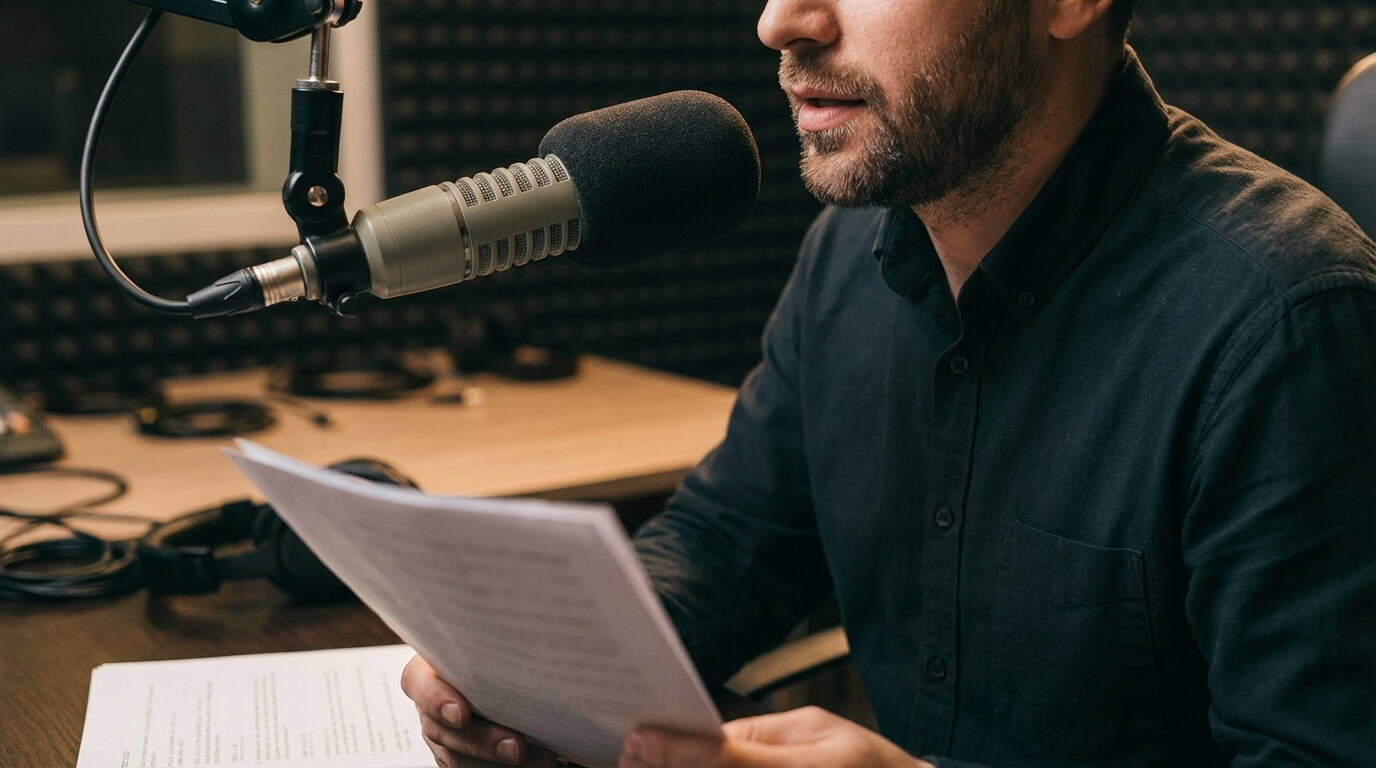
The Psychological Power of Audio Social Proof in Advertising
Human voices carry a psychological weight that written testimonials cannot match. When a listener hears the natural inflection and genuine emotion in a customer's voice, it creates an immediate sense of intimacy. Establishing an auditory connection serves as a powerful mental shortcut for consumers who are navigating complex purchasing decisions.
Social proof operates through mechanisms such as informational and normative influence, in which we look to others to determine correct behavior. Since podcast listeners find the medium 23 times more trustworthy and authentic than social media, the impact of audio reviews is significantly amplified. Hearing a real person describe their experience reduces the uncertainty that often stalls a potential purchase.
Authentic customer voices strengthen brand credibility by providing a layer of transparency that social platforms often lack. Unlike social media, where 55% of Gen Z find the environment untrustworthy, podcasts offer a trust halo that benefits advertisers. By leveraging these genuine vocal cues, brands can tap into the deep sense of community that defines the podcasting experience.
Nearly 79% of podcast audiences feel like they're engaging in a one-to-one conversation while listening. Creating a sense of intimacy makes the inclusion of user-generated audio feel like a recommendation from a trusted friend. When listeners hear a relatable voice, they're more likely to project themselves into the success story being shared.
Is There a Contrast Effect Between Professional Hosts and Authentic Consumers?
The transition from a polished podcast host to a raw and unpolished customer voice creates a compelling dynamic. While the host provides professional authority, the customer offers a real-life perspective that signals a shift in narrative. The variation between voices captures the listener's attention more effectively than a uniform and studio-produced advertisement.
Mid-roll placements are particularly effective for this strategy because they generate significantly higher click-through and conversion rates than other positions. These ads often see visitor rates of 0.35%, outperforming pre-roll and post-roll alternatives. The shift from the host's refined delivery to an organic user voice prevents the audience from tuning out during the break.
Industry-Specific Use Cases for Customer Testimonial Audio Ads
Different industries require unique approaches when deploying customer testimonial audio ads to maximize resonance. B2B brands often focus on testimonials that highlight ROI, efficiency, and professional problem-solving. Hearing a peer describe how a specific service saved their company time provides the necessary validation for high-stakes decisions.
Consumer-focused brands typically lean into emotional satisfaction and lifestyle improvements within their audio reviews. A B2C campaign might feature a customer describing the relief of having a pain point solved or the joy of a new experience. These testimonials help potential buyers visualize the product fitting into their own daily routines.
Benchmarks from other mediums show that video testimonials can increase conversion rates by 34%. Audio testimonials represent a natural evolution in the podcast space, providing similar lift without requiring visual production. By focusing on the auditory experience, brands can maintain the theater of the mind while proving their value.
High-growth brands in the health and wellness sector often use audio reviews to build a sense of safety. Testimonials regarding physical results or mental clarity resonate deeply in the intimate podcast environment. Focusing on tangible results transforms a simple marketing message into a robust demonstration of group wisdom.
Effective Strategies for Sourcing High-Quality Audio Content
The foundation of a successful testimonial-driven campaign lies in the quality of the raw material you collect. Without clear and compelling audio from your customers, even the best production techniques will fail to resonate. Sourcing is a critical first step that requires a strategic approach to ensure the final ad sounds professional yet authentic.
Should You Implement Dedicated Audio Feedback Channels?
Providing customers with dedicated tools, such as voicemail lines or web-based recording widgets, makes the submission process much easier. Specialized apps like VocalVideo or VideoAsk allow users to record high-quality audio directly from their smartphones or computers without needing technical expertise. When the barrier to entry is low, brands are much more likely to receive a high volume of submissions.
Technological ease is a major factor in whether a customer will take the time to share their story. If the recording process feels frictionless, users are more inclined to provide detailed and enthusiastic feedback. A frictionless recording process ensures that your library of social proof grows consistently over time without heavy manual labor.
Recording widgets can be embedded directly into thank-you pages or follow-up emails sent after a purchase. Automated requests catch the customer at the peak of their excitement about the product. Capturing that initial enthusiasm results in more authentic and persuasive audio clips for your mid-roll spots.
Can You Mine Social Media and Video Reviews for Audio Gems?
Many brands already have a wealth of user-generated content living on platforms like TikTok, YouTube, and Instagram. Extracting audio from these video reviews is an efficient way to find testimonials that have already proven engaging. If a clip performed well on social media, there's a high probability it will also resonate with podcast listeners.
The key is to ensure the extracted audio remains clear enough for a professional podcast environment. Modern editing tools can help isolate the voice and remove distracting background noise from these social clips. Repurposing existing content saves time and allows you to leverage social proof that the public has already vetted.
What Are the Benefits of Direct Outreach and Remote Interviewing?
Reaching out to your most loyal customers for short and guided interviews allows you to steer the conversation toward specific talking points. While you want to maintain authenticity, this method ensures the testimonial highlights exactly the features you want. Guided interviews provide a more structured alternative to passive submission methods.
Remote high-fidelity recording tools make it possible to capture studio-quality sound from a distance. Professional platforms like Riverside.fm or SquadCast record the audio locally on the customer's device to avoid compression issues. Local device recording ensures that the final clip is clear and matches the high standards of modern podcast production.
Using platforms like Descript can further simplify the editing process once the interview is complete. These tools allow you to edit audio by manipulating text, which speeds up the creation of tight sound bites. High-quality sourcing ensures that your mid-roll social proof sounds as good as the podcast content itself.
Overcoming Common Challenges in Audio Production
One of the most frequent hurdles in this process is dealing with poor recording environments that produce echoes or background noise. If a customer's audio is too distracting, it can pull the listener out of the experience and diminish professionalism. Providing customers with a simple list of tips can significantly improve the raw quality before they record.
A step-by-step checklist for your first audio testimonial outreach campaign should include clear instructions on microphone placement. Ask customers to record in a quiet room with soft surfaces, such as a closet full of clothes, to dampen echoes. Suggesting a quiet recording environment can elevate a standard smartphone recording to a professional level.
Another challenge is the tendency for speakers to ramble or sound overly rehearsed when they're put on the spot. Instead of giving them a strict script, try providing a loose framework of open-ended questions. Providing a loose framework allows the customer to speak naturally while still covering the topics that are most relevant to your marketing goals.
Sometimes a testimonial might be perfect in content but flawed in its delivery. In these cases, professional editors can use tools like de-essers to reduce sibilance or low-mid reduction to fix muddy sounds. If a recording is truly unusable, it's often better to request a re-record rather than compromise campaign quality.
Why Real Voices Enhance the Host-Read Endorsement
Customer audio serves as a secondary layer of validation, reinforcing the host's personal recommendation. While 67% of listeners find inspiration in podcasts, they still value seeing a broad community consensus. When a host's voice is joined by everyday users', the advertisement feels less like a transaction.
The combination of host and consumer voices creates a powerful environment where the brand's claims are backed by both authority and experience. Host-read ads drive about 30% more purchases per impression than producer-read spots. Adding real customer voices further strengthens this connection, grounding the endorsement in the audience's collective experience.
Two in three listeners aged 18-34 say they find podcast hosts to be the most authentic media figures. Combining the host's authenticity with unscripted customer voices creates a trust halo that is difficult to replicate. Focusing on unscripted voices ensures that true native podcast ad integration strategies remain effective as the industry matures.
Host-read ads deliver a 68% higher brand recall rate than pre-recorded spots, according to recent reports. By integrating real voices, brands can increase the likelihood that listeners will consider their products. About 51% of podcast listeners are more likely to consider a product after hearing a host-read endorsement.
The Art of Splicing: Integrating Testimonials Into Creative Flow
Production is where raw recordings are transformed into a cohesive and engaging mid-roll advertisement. The goal is to create a seamless transition that balances professional studio quality with the organic charm of user voices. Achieving this balance requires a careful hand and a deep understanding of audio dynamics to keep the listener immersed.
How Do You Create Natural Transitions and Bridges?
The podcast host plays a central role in introducing the customer testimonial so it doesn't feel like a jarring interruption. Using phrases like "but don't just take my word for it" helps bridge the gap. These verbal handoffs signal to the listener that the narrative is continuing in a new voice.
A smooth transition keeps the listener's brain engaged without causing them to reach for the skip button. Framing the testimonial as a guest appearance maintains the flow of the conversation and upholds the intimacy of the medium.
The host can also pose a question that the customer testimonial then answers in their own words. For example, a host might ask how a product handles a specific challenge before playing a clip of a customer solving that exact problem. Employing a question-and-answer structure feels highly organic and keeps the audience curious.
Is Balancing Audio Quality and Levels Necessary for Professionalism?
Mixing a studio-recorded host with a phone-recorded customer requires technical precision to ensure a consistent listening experience. Editors should use volume leveling and equalization to prevent the listener from having to adjust their volume during the ad. A presence boost around 5 kHz can improve clarity and help the customer's dialogue stand out.
Applying a high-pass filter at 80-100 Hz is necessary to remove low-frequency rumble from non-professional recordings. While a slightly lo-fi sound can enhance the feeling of authenticity, it must still meet platform standards. Podcasts should generally target an overall level of -16 LUFS to ensure they sound great on all major streaming services.
Compression ratios between 3:1 and 4:1 are typically effective for voice compression in these segments. Gentle compression ensures that the customer's voice remains clear without being overwhelmed by the host's studio-grade equipment. Using a de-esser to reduce sibilance will also improve the overall listening experience for your audience.
Can Sound Design and Audio Branding Enhance the Testimonial?
Using a subtle background music track can tie the host and customer voices together. Maintaining a consistent soundscape provides a sense of continuity, making the different recordings feel like they belong in the same space. Sound design also helps maintain your brand's identity throughout the entire mid-roll segment.
Incorporating a brand's signature sonic logo alongside a customer's voice can create a long-term sense of authority. Sonic branding ensures that the listener immediately associates the positive testimonial with the brand identity. The music should support the speaker's emotion rather than distract from their message.
Creative Scripting for Testimonial-Driven Mid-Rolls
Scripting an ad that features multiple voices requires a different structural approach than a standard solo read. The sandwich method is a highly effective framework in which the host introduces a common problem the audience faces. The customer then provides the solution based on their personal experience, before the host returns with a call to action.
Customer testimonial audio ads drive listener action by providing a narrative arc that moves from tension to resolution. By placing the real voice at the center of the story, you provide the emotional payoff that listeners find compelling. It turns the advertisement into a miniature story that captures the imagination and builds lasting trust.
Longer ad reads of 60+ seconds show a 15% increase in conversion rates compared to shorter formats. These extended spots allow for more detailed a/b testing for podcast advertising to see which customer stories resonate best. Taking the time to build a narrative ensures your message sticks with the audience.
Podcast ad authenticity is maintained when using unscripted customer voices within these scripted frameworks. The contrast between the host's planned delivery and the customer's natural speech signals genuine social proof. A structured framework allows the brand to stay on message while benefiting from the raw honesty of a real user.
Legal Considerations and Ethical Standards
Obtaining proper legal releases is a non-negotiable step when using customer voices in paid advertisements. Using someone's voice without their explicit consent can lead to significant legal risks and damage your brand's reputation. Transparency with your contributors is key to maintaining an ethical relationship with your community.
The FTC has strict rules regarding the use of consumer reviews and testimonials to prevent the spread of false information. Violations of these rules can result in civil penalties of up to $51,744 per violation. Brands must ensure that every testimonial reflects the real experience of an actual consumer and is not fabricated.
It's also a legal requirement to disclose any material connection between the reviewer and the business. If a customer was given a free product or a discount in exchange for their review, this must be clearly stated. Documenting consent and maintaining a clear paper trail protects your brand's interests and ensures compliance with federal advertising standards.
The FTC Rule prohibits reviews that misrepresent the reviewer's identity or falsely claim to reflect the experiences of real consumers. Officers or managers must not solicit reviews from immediate relatives or employees without ensuring full disclosure of their connection. These ethical standards are essential for maintaining the long-term credibility of your brand in the audio space.
Measuring the Impact and ROI of Authentic Audio Ads
Tracking the effectiveness of testimonial-driven ads requires a combination of traditional metrics and specific conversion data. Brands should look at coupon code redemption rates and traffic to vanity URLs to see how these spots compare to standard mid-rolls. According to the Interactive Advertising Bureau (IAB) standards, direct-response ads on podcasts average a 4.4% conversion rate, which surpasses many other digital channels.
Successful marketing managers must understand how to measure ROI on social proof audio ads to justify future spending. By comparing podcast ad lift across different campaigns, you can identify which testimonials drive the most engagement. Tracking performance data enables you to refine your sourcing and production strategies over time.
A/B testing is the most reliable way to prove the superior conversion power of authentic customer audio. You can run two versions of the same ad, one with just the host and one with a customer testimonial, to see which performs better. A sample size of at least 500 to 1,000 listeners per variant is usually needed to draw meaningful conclusions.
Since 40% to 60% of podcast listeners have purchased products after hearing them advertised, the potential for high ROI is significant. Consistently monitoring ROI optimization through ab testing allows you to maximize the impact of your social proof. These ads contribute to long-term brand lift and increased trust among your target audience.
Scaling Campaigns with Dynamic Ad Insertion (DAI)
Dynamic ad insertion allows brands to swap customer testimonials in real time based on the listener's demographics or geographic location. This technology ensures that a listener in New York hears a testimonial from a local peer while a listener in London hears a different relevant voice. Implementing DAI maximizes the relevance of social proof and increases the overall effectiveness of a national podcast campaign.
Elevate Your Audio Strategy With Expert Media Buying
Incorporating real customer audio into your podcast mid-roll ads is a powerful way to build trust and drive conversions. By shifting from scripted commercials to authentic stories, you tap into the unique psychological power of the human voice. Modern podcast advertising requires careful sourcing and professional production, but the payoff in listener engagement and brand loyalty is significant.
Mynt Agency knows how to navigate every step of the podcast advertising process to ensure your campaigns resonate with a national audience. We specialize in creating high-quality media campaigns that leverage precision media buying to reach your goals. Contact us today to learn how our expertise in authentic content and audio strategy can help your brand stand out and achieve lasting success.
