
- The United States podcast advertising market is projected to reach $10.5 billion by 2030, leveraging a high-intent audience where 68 percent of listeners hold a bachelor’s degree or higher.
- Host-read endorsements serve as the primary driver of audio trust, accounting for 75 percent of market revenue and delivering a 68 percent higher brand recall rate than standard pre-recorded spots.
- High-growth brands can achieve national scale and efficiency through dynamic ad insertion and programmatic audio buying, which allow for real-time creative optimization and precise audience targeting.
- Implementing a multi-layered attribution strategy using digital pixels, vanity URLs, and post-checkout surveys is essential for measuring direct response ROI and the incremental brand lift of audio campaigns.
Podcast advertising has moved from a niche experiment to a powerful engine for national brand growth. Listeners provide a level of focused attention that's hard to find on social media or traditional television. Companies that embrace these unique podcast ad placements often see a significant lift in both brand awareness and direct conversions.
The audio landscape is shifting as more consumers trade traditional radio for on-demand playlists and episodic content. It's an environment in which the connection between the host and the listener forms the foundation for high-performance marketing. To achieve these results, brands must move beyond traditional spots and explore advanced distribution and creative strategies.
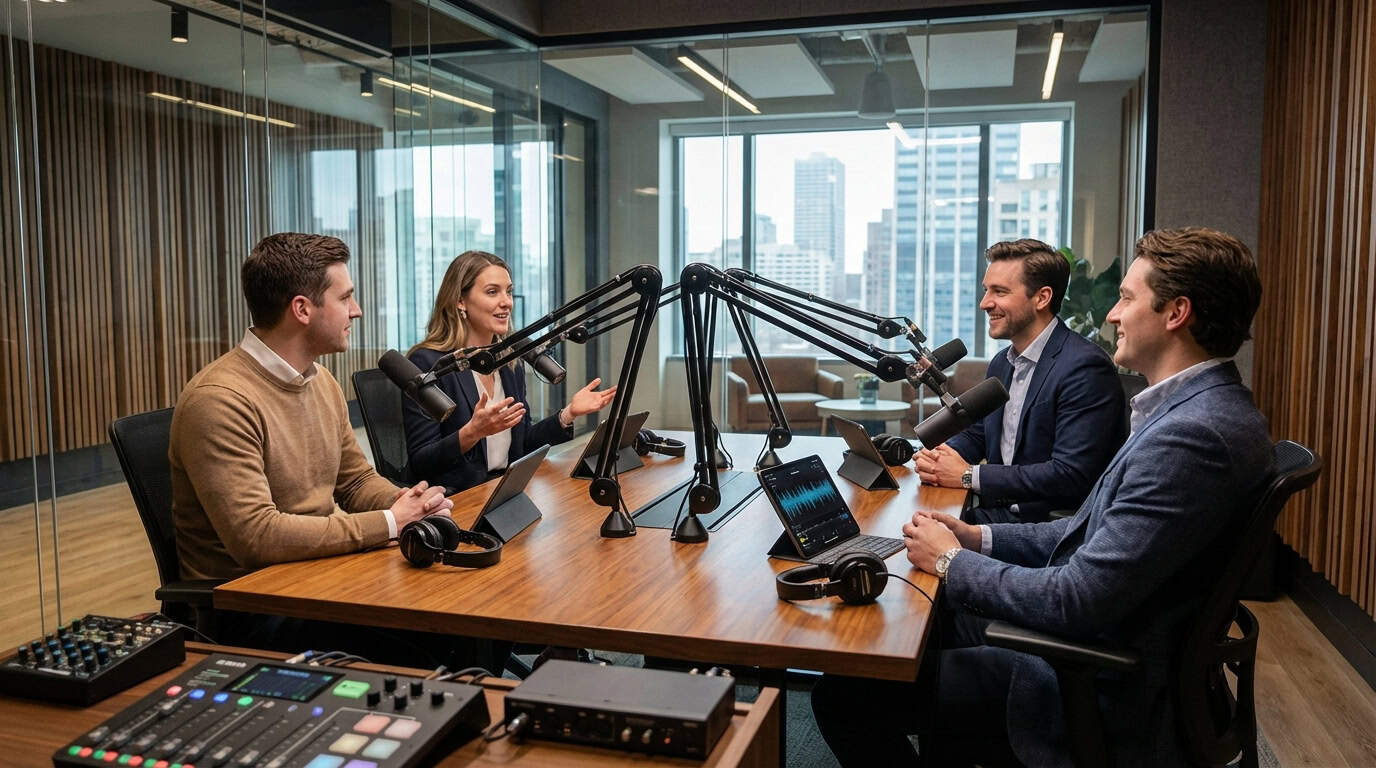
A Historical Perspective on Audio and Television Evolution
Modern advertising history started in 1941 when the first television commercial aired for Bulova watches. This ten-second spot set the stage for decades of interruptive, broadcast-style messaging. Radio dominated the early twentieth century by offering families a shared experience through serialized storytelling and live news. Brands quickly learned that the human voice could build trust much faster than print media alone.
As television technology advanced, advertisers moved toward high-production-value commercials that targeted broad demographics. The focus remained on reaching the largest possible audience through a single broadcast signal. This model relied on the Gross Rating Point to measure success across national networks. While effective for reach, it lacked the precision modern high-growth brands need to scale efficiently.
The digital revolution and the rise of platforms like Spotify and Apple Podcasts introduced on-demand content that changed how audiences interact with media. Consumers shifted from passive background listening to active, intentional consumption of episodic content. This evolution paved the way for the current podcasting boom, where intimacy replaces mass-market noise. Today, audio advertising examples show a return to the trusted, host-led endorsements of the golden age of radio.
The Financial Expansion of the Audio Market
The podcasting industry is experiencing unprecedented financial growth and cultural relevance. In 2024, the United States podcast advertising market generated revenue of $5,921.5 million. US podcast advertising revenue is expected to climb to $10.5 billion by 2030. These statistics show that brands are investing more resources in the space to capture listeners' attention.
Global podcast ad revenue is also projected to exceed $4.2 billion in 2025. A jump in revenue represents a 17% increase from the previous year and highlights the medium's rapid adoption. High-growth brands are increasingly shifting their marketing budgets away from traditional broadcast channels such as linear radio. While radio offers broad reach, it often lacks the precision found in on-demand audio environments.
Modern consumers prefer to control when and where they consume their favorite shows. The migration toward on-demand platforms allows advertisers to reach specific niche audiences that were previously difficult to isolate. By understanding these technical and creative nuances, marketing leaders can build campaigns that scale with high-performance efficiency. Data-driven strategies reduce media waste by ensuring the right message reaches the right ear at the right time.
Understanding the High-Intent Podcast Audience
The demographics of the podcasting audience make it one of the most attractive segments for enterprise-level services. Data from the Infinite Dial report indicates that 68% of listeners hold a bachelor's degree or higher. These individuals are 36% more likely to earn an annual income of $75,000 or more. The high educational and income profile of listeners suggests a consumer base with significant purchasing power.
Understanding the difference between lean-in and lean-back content is key to developing effective creative podcast advertising ideas. Unlike music, which often serves as background noise, podcasts require active attention to follow a narrative. Active lean-in behavior means the listener is mentally prepared to process sophisticated brand messages. When a listener chooses to play an episode, they're signaling a clear intent to learn or be entertained.
For luxury brands or high-end enterprise services, this high-intent audience is a major advantage. Because listeners are often more affluent and educated, the creative approach can afford to be detailed. Advertisers don't need to rely on flashy gimmicks to capture interest when the audience is already engaged. Focusing on value propositions that respect the listener's intelligence can lead to better long-term brand equity.
The Shift from Passive Listening to Active Engagement
Hearing an advertisement on a linear radio station is often a passive experience. In contrast, listening to a podcast is a deliberate choice involving a specific topic and voice. This distinction creates a psychological environment where the advertisement feels like a personal recommendation. The intimacy of the medium is heightened by headphones, creating a direct line to the inner ear.
The inner-ear experience fosters a sense of trust and familiarity unique to the audio world. When a host speaks directly to a listener, it creates a one-on-one connection that traditional media cannot replicate. Brands must respect this intimacy by ensuring their ads don't disrupt the flow of the content. Successful creative concepts prioritize a tone that matches the show's energy to maintain listener comfort.
Ads that feel like a natural part of the listener's routine are far more effective than aggressive sales tactics. High-growth brands achieve this by using scripts that mimic the podcast's conversational style. When the transition from content to commercial is smooth, the listener is less likely to skip the segment. Prioritizing active engagement ensures that the brand's message is heard and processed rather than ignored.
Host-Read Endorsements: The Foundation of Audio Trust
Host-read ads have established themselves as the most reliable way to build credibility with a dedicated audience. In 2024, this format accounted for the largest market segment, with a revenue share of 75.23%. Host-read dominance stems from the deep trust listeners place in the creators they follow daily. While these spots are highly effective, they must be managed carefully to ensure the message stays fresh.
A parasocial relationship occurs when a listener feels a deep personal connection to a host. The parasocial bond allows the host to act as a trusted friend during the commercial break. Research shows that host-read ads deliver a 68 percent higher brand recall rate than standard pre-recorded spots. Trust built through podcasting is often more powerful than a traditional celebrity endorsement because of weekly listener interaction.
Recommendations from a podcast host carry significant weight because they are viewed as experts within their niche. When a host shares a personal experience with a product, it adds a layer of authenticity. Brands should look for hosts whose values and interests align naturally with their own corporate identity. A well-aligned partnership ensures that the endorsement feels earned and genuine to the core audience.
A Step-by-Step Blueprint for Scripting High-Performance Host-Reads
Successful host reads begin with a strong hook that bridges the gap to the editorial content. The first 15 seconds should establish why the product is relevant to the specific topic under discussion. A 60-second spot typically requires between 130 and 150 words to allow for a natural speaking pace. If the script is too long, the host may rush the delivery and lose the listener's trust.
The middle section of the ad should focus on a single, compelling value proposition rather than a list of features. Narrative-driven scripts allow the host to weave in a personal anecdote or a specific use case. This makes the advertisement feel like a helpful tip rather than a corporate pitch. You should provide bullet points that guide the host without restricting their unique personality and comedic timing.
Every host-read must conclude with a clear, concise, easy-to-remember call to action. The host should repeat the promo code and vanity URL at least twice during the final segment. This ensures that the listener has time to process the information, even if they are distracted. A structured approach to scripting helps maintain brand safety while allowing for the creative freedom that drives engagement.
Scripted vs. Unscripted: Finding the Balance for Authenticity
Deciding between a rigid script and a set of bullet points is a common challenge for brands. A rigid script ensures that every legal disclaimer and product feature is mentioned exactly as intended. However, this approach can lead to a wooden delivery that lacks the personality the audience expects. If the ad sounds too scripted, it can break the immersion and cause the listener to disengage.
Providing bullet points allows the host to put the brand's message into their own words. Ad-libbing flexibility often leads to spontaneous moments of humor or personal insight that make the ad feel organic. Host-read ads perform 60% better than pre-produced spots in terms of engagement. By giving the host room to breathe, the brand benefits from the natural charisma that made the show popular.
Brands can maintain safety and consistency by providing guardrails rather than a word-for-word script. These guardrails might include specific phrases to avoid and key talking points to cover. This middle-ground approach protects the brand's reputation while still allowing for an authentic delivery. It's a strategy that ensures the core message is delivered without stifling the show's creative energy.
Optimizing the Audio Creative Brief for Scaled Production
A well-crafted creative brief is the foundation of every successful audio campaign. It should outline the core value proposition, the target audience profile, and the desired emotional response from the listener. High-growth brands must include technical specifications such as tone of voice, preferred pacing, and mandatory brand safety guidelines. Providing clear direction ensures that hosts and production teams deliver a consistent message that aligns with the overall marketing strategy.
Innovative Ad Formats and Podcast Ad Concepts
The podcasting industry is maturing, and with it comes the need for more creative ways to reach audiences. While standard mid-rolls are effective, they aren't the only options available to modern marketers. Brands that experiment with diverse podcast ad concepts often see higher engagement because the content feels fresh. Moving beyond the standard ad break helps a brand stand out in a crowded digital marketplace.
Custom-branded segments allow a brand to sponsor a specific recurring portion of an episode. These segments are often titled to highlight the sponsor, such as "Tech Tip of the Week." This approach integrates the brand directly into the editorial flow, making the presence feel like a contribution. By providing useful information, the brand establishes itself as a thought leader within its industry.
Listeners appreciate segments that provide value without requiring an immediate purchase. When a brand provides helpful advice or interesting facts, it builds a positive association in the consumer's mind. This integrated content strategy is particularly effective for B2B brands that want to showcase expertise. It's a way to maintain a constant presence in the listener's feed without becoming repetitive or annoying.
Surround Sound Takeovers: Dominating the Listeners' Feed
A surround-sound takeover is a strategy in which a single brand sponsors every available ad slot in an episode. This high-frequency approach ensures that the listener hears the brand's message multiple times within a single session. Repeated exposure is a powerful tool for driving brand recall and making a lasting impression. It's a bold move that signals the brand's commitment to the space and its confidence in its product.
A surround-sound takeover strategy is particularly effective for high-growth brands that are launching a new product or campaign. By dominating the ad slots of a popular show, a brand can create a sense of ubiquity. Frequent message delivery helps to reinforce the key value propositions and ensures the call to action is heard. It's a focused way to spend a marketing budget to achieve maximum impact in a short period.
Takeovers also prevent competitors from appearing in the same episode, giving the brand exclusive access to attention. Ad exclusivity can be a major advantage when trying to establish a foothold in a new market. When a brand is the only voice the listener hears during the breaks, the message is more likely to stick. It's a high-impact tactic that can yield impressive results when executed on the right shows.
Serialized Ad Creative: Telling a Story Over Several Episodes
Serialized advertising is a concept where a brand's creative narrative unfolds across a series of podcast episodes. Instead of repeating the same spot, the brand tells a story that has a beginning, middle, and end. This cliffhanger approach encourages listeners to pay attention to future ads to find out what happens next. It's a sophisticated way to keep the audience engaged with the brand's message over the long term.
The serialized format requires more production resources and careful planning than a standard ad buy. The brand must develop a compelling story that's relevant to its product and interesting enough to hold attention. The production quality needs to be high to ensure that the serialized ads feel like a premium experience. For brands with a clear narrative arc, this approach can create a deep connection with the audience. For instance, a software company might use a five-episode arc to tell the story of a startup overcoming a major technical crisis.
Serialized creative is an excellent way to demonstrate product benefits through a relatable scenario or case study. By breaking the story into smaller parts, the brand can highlight different features in each episode. This keeps the message from becoming overwhelming and allows the listener to digest information at a steady pace. It's a creative way to build momentum and drive curiosity about the brand's offerings.
Creative Approaches by Industry Vertical
The strategy for an audio campaign varies significantly depending on the product being sold. High-growth brands must tailor their creative podcast advertising ideas to meet the specific expectations of their target industry. Fintech brands, for instance, must balance the need for security and expertise with a conversational tone. They often succeed by using host-read ads that explain complex financial tools through simple, everyday metaphors.
In the health and wellness space, the creative focus should be on the personal journey and emotional transformation. Audio advertising examples in this vertical often feature hosts sharing their own health challenges and how a product helped them. Sharing personal health challenges builds trust by showing that the brand understands the listener's specific pain points. Authentic storytelling is more persuasive than a list of ingredients when it comes to lifestyle improvements.
B2B SaaS companies should prioritize efficiency and problem-solving in their podcast sponsorship formats. Professional listeners are looking for tools that can save them time or improve their bottom-line results. These ads should highlight specific ROI metrics and use cases that resonate with a business-minded audience. Providing a free trial or a deep-dive demo through a vanity URL helps move these high-value prospects through the funnel.
E-commerce brands often find success by focusing on the sensory details and immediate gratification of their products. Using professional sound design to mimic the unboxing experience can create a theater of the mind. These brands benefit from seasonal promotions and limited-time offers that drive urgent action. By matching the creative approach to the industry vertical, brands can ensure their message feels relevant and timely.
Production Excellence: Building Cinematic Audio Experiences
The way an advertisement sounds is just as important as what's being said in the script. High production value is a requirement for enterprise brands that want to maintain a professional image. For produced spots, the audio quality must be crisp, clear, and engaging to match the content it surrounds. Transitioning to fully produced cinematic experiences can significantly elevate a brand's presence.
Professional sound design and Foley can transform a standard audio ad into a sensory experience for the listener. Using sounds like a sizzling pan or the hum of a busy city helps create a theater of the mind. These audio cues allow the listener to visualize the product and the setting without needing a screen. It's a powerful way to make a brand's message more memorable and emotionally resonant.
ASMR, or Autonomous Sensory Meridian Response, is another technique that uses specific sounds to create an emotional response. This can include soft whispering or crisp environmental noises that are pleasing to the ear. Incorporating subtle ASMR elements into a podcast ad can grab the listener's attention and create a unique atmosphere. It's a creative way to stand out from the traditional, loud advertising styles found on the radio.
Subtle background textures can be used to establish a mood without distracting from the primary marketing message. For example, a soft acoustic guitar can evoke warmth, while electronic beats suggest innovation. The choice of background sound should always support the brand's identity and the goals of the campaign. High-quality sound design ensures that the advertisement feels polished and intentional.
Using Immersive 3D Audio and Spatial Soundscapes
Spatial audio and 8D sound represent the cutting edge of podcast advertising technology. These techniques make the listener feel as though they are inside the ad, with sounds moving in a three-dimensional space. This level of immersion is incredibly engaging and can make a simple story feel like a movie. It's a futuristic approach that leverages the fact that many listeners use high-quality headphones.
Brands can use spatial audio to guide the listener's attention and create a sense of depth and movement. Imagine an ad where a voice starts in the distance and slowly moves closer to the listener's ear. This technology is perfect for storytelling because it places the listener right in the middle of the action. It's a memorable experience that differentiates a brand from those using traditional mono audio.
Hardware requirements for listeners are minimal, as most modern headphones can support spatial audio effects. This makes it a viable option for brands looking to reach a large audience with a high-tech concept. While it requires specialized production skills, its impact on the listener can be much greater than that of a standard ad. High-growth brands should consider these immersive technologies to stay ahead of the curve.
Attribution Modeling for National Audio Campaigns
Measuring the success of a national audio campaign requires a sophisticated approach to attribution and data analysis. High-growth brands must move beyond simple promo codes to understand the full impact of their media spend. Modern attribution modeling for national audio campaigns often combines digital pixels and post-checkout surveys. This multi-layered strategy provides a more accurate picture of the customer journey across different platforms.
Digital pixels allow advertisers to track when a listener visits a website after hearing a specific podcast ad. These tools can link an ad exposure on a mobile device to a subsequent purchase on a desktop computer. Using pixels for cross-device tracking is essential for accurately calculating cost per acquisition in large-scale campaigns. It provides the hard data needed to justify significant investments in the podcasting space.
Post-checkout surveys remain a powerful tool for capturing "dark social" and word-of-mouth conversions. Simply asking customers "How did you hear about us?" can reveal the influence of shows that might not be captured by pixels. This qualitative data helps brands understand which hosts have the strongest influence over their audience's buying decisions. Combining these insights with technical metrics leads to more effective media planning and budget allocation.
Successful brands also use holdout testing to measure the incremental lift provided by their audio advertisements. By comparing a market that receives podcast ads to a similar market that does not, they can see the true ROI. Holdout testing accounts for the 'halo effect' where podcast ads drive searches on Google or social media. A unified measurement framework ensures that every dollar spent on audio contributes to the brand's long-term growth.
Data-Driven Strategies for Large-Scale Podcast Campaigns
Launching a large-scale podcast campaign requires more than just great creative; it needs a solid data-driven foundation. High-growth brands must move beyond manual placements and embrace the efficiency of modern media buying technologies. Measurement and optimization are key to ensuring that every dollar spent contributes to the brand's goals. Efficiency is just as important as the creative concepts when it comes to scaling a national presence.
Dynamic ad insertion, or DAI, is a technology that allows ads to be served at the moment a listener hits play. This means that a brand can target specific regions or timeframes with tailored creative content. DAI currently accounts for over 90% of all podcast ad revenues because it offers a high degree of flexibility. Dynamic ad insertion allows for real-time updates to creative, ensuring the listener always hears a relevant message.
Baked-in ads, on the other hand, are a permanent part of the podcast episode file and remain there forever. These ads often have an evergreen nature that can provide value for years. While they lack the targeting capabilities of DAI, baked-in ads benefit from the high level of trust associated with host-read content. Choosing between DAI and baked-in depends on whether a campaign is focused on immediate reach or brand building.
For most high-growth brands, a mix of both DAI and baked-in placements provides the best balance. DAI allows for rapid testing and geographic targeting, while baked-in ads offer the enduring authority of the host's endorsement. Understanding how to use these technologies together is a vital part of a modern media strategy. Each format has its strengths, and a data-driven approach helps determine the right mix for any campaign.
Programmatic Audio at Scale for Enterprise Marketers
The rise of programmatic audio buying has changed how enterprise marketers approach the podcast space. Programmatic technology allows brands to use data to target specific audience segments across thousands of different shows. Instead of buying individual podcasts one by one, advertisers can reach their ideal customers wherever they are listening. Programmatic media buying provides a level of scale and efficiency that was previously impossible.
Media buying agencies play a key role in navigating the complex programmatic landscape to ensure brand safety. They use sophisticated tools to vet shows and ensure that ads are only placed in high-quality environments. This automated approach also allows for better tracking and attribution across a wide range of placements. It's a necessary strategy for brands that need to reach a national or international audience quickly.
Programmatic buying also allows for more precise budget management and real-time adjustments to campaign performance. If a specific audience segment is performing well, the buyer can instantly shift more resources to that segment. Real-time adjustments ensure that the brand's marketing budget is always being used most effectively. For high-growth companies, programmatic audio is a fundamental tool for achieving rapid growth.
Real-Time Creative Optimization and A/B Testing
The digital nature of podcasting makes it possible to A/B test audio creative in real-time. Brands can test different hooks, calls to action, or value propositions to see which ones resonate best with the audience. This data-driven approach mirrors the optimization strategies used in other digital channels. By analyzing performance metrics, marketers can refine their creative to improve engagement rates.
Testing different versions of an ad helps to identify the specific elements that drive listener action. For example, a brand might find that a humorous opening performs better than a serious one for a certain demographic. These insights allow for continuous improvement throughout the life of a campaign. Instead of guessing what works, brands can rely on hard data to guide their creative decisions.
Real-time optimization also helps to prevent ad fatigue by allowing brands to swap out creatives that are no longer performing. If a listener has heard the same ad too many times, they are likely to tune it out. By monitoring frequency and engagement, brands can keep their message fresh and effective. This level of precision is what sets high-growth campaigns apart from more traditional advertising efforts.
Direct Response Tactics That Drive Measurable ROI
Performance-based podcasting relies on creative choices that encourage listeners to take specific actions. Even campaigns focused on brand awareness should include some element of measurement to track their success. About 49% of listeners say they've taken an action after hearing a podcast ad, showing the medium's power. Creative tactics for tracking behavior are necessary for proving the return on investment for any audio campaign.
Promo codes are one of the most common and effective ways to track direct conversions from podcast ads. These codes should be easy to remember and directly relate to the brand name or the host's name. Offering a discount that's exclusive to podcast listeners provides a clear incentive for the audience to act. This reward for listening helps to build a positive relationship between the brand and the consumer.
The psychology of exclusive rewards makes listeners feel like they are part of a special group. It also provides a direct way to attribute sales to a specific podcast show or host. When a consumer uses a host-specific code, the brand knows exactly which placement drove that purchase. This information is key to determining which partnerships are the most profitable and should be scaled.
To maximize the effectiveness of coupon codes, they should be mentioned multiple times throughout the ad spot. The host should clearly spell out the code and the website address to avoid confusion. Using simple, punchy language helps the code stick in listeners' minds even after the episode ends. It's a straightforward tactic that remains a cornerstone of successful performance marketing in audio.
The Power of Custom Landing Pages and Vanity URLs
Vanity URLs are another powerful tool for tracking traffic and measuring the success of a podcast campaign. A vanity URL is a simple, branded web address like brand.com/podcastname that's easy for a listener to remember. When a listener visits this specific page, the brand can track their journey through the sales funnel. This provides more detailed data than a simple promo code and allows for a personalized user experience.
A seamless transition from the audio ad to the landing page is necessary for maintaining a high conversion rate. The landing page should greet the listener and reinforce the specific message they heard during the podcast. For example, if the ad mentioned a specific product feature, that feature should be highlighted on the page. This continuity builds trust and makes it easier for the consumer to complete their purchase.
Designing landing pages specifically for podcast listeners allows for more targeted messaging and better data collection. The brand can use these pages to offer additional content, such as white papers or demo videos, that further educate. By tracking which shows drive the most traffic, marketers can optimize their podcast ad integration strategies. It's a strategic way to bridge the gap between an audio experience and a digital transaction.
Case Study: Scaling a National Brand Through Unique Podcast Ad Placements
Consider the growth trajectory of an anonymized B2C wellness brand that used a multi-layered audio strategy to achieve national scale. The brand initially struggled with high customer acquisition costs on social media platforms where competition was fierce. By shifting their budget to a diverse set of unique podcast ad placements, they were able to reach a more engaged audience. They focused on host-read ads within health-focused shows to build immediate credibility with their target demographic.
Mynt Agency optimized these large-scale audio campaigns by implementing real-time tracking and creative rotation. The team used proprietary research tools to identify shows with high-intent listeners who matched the brand's ideal customer profile. By testing different podcast ad concepts, such as custom-branded segments and serialized storytelling, the brand saw a significant lift in retention. This approach allowed them to scale their spend while maintaining a consistent cost per acquisition across multiple niches.
The results of this strategic shift were measurable and impactful for the brand's bottom line. They achieved a 30% increase in brand recall and a 25% reduction in overall customer acquisition costs within six months. This case study demonstrates how a data-backed distribution strategy can amplify even the most creative audio content. High-growth brands benefit from this level of professional oversight to navigate the complex world of national media buying.
Cross-Channel Synergy: Connecting Podcast Ads to TV and YouTube
Modern marketing is about being present across multiple channels to create a cohesive brand experience. Podcasting is a vital part of an omnichannel strategy that includes TV, YouTube, and other digital platforms. When a consumer sees a brand on YouTube and then hears about it on their favorite podcast, the message is reinforced. This multi-touch approach increases the likelihood that the brand will be remembered and trusted.
The echo effect occurs when a brand uses similar creative assets and messaging across both radio and podcasting. This synchronization ensures that the broad reach of radio and the deep engagement of podcasts work together. While radio builds mass awareness, podcasting provides the intimacy needed to drive conversions. Using insights from over a decade of placements, an agency can optimize these cross-channel buys for maximum impact.
Coordinating the timing of these placements helps saturate a market and keep the brand top of mind. If a consumer hears a radio ad during their commute and a podcast ad in the evening, the message is reinforced twice. This frequency is key to moving a potential customer through the marketing funnel from awareness to consideration. It's a way to cover all bases and ensure that no part of the audience is missed.
Using consistent voice talent and sound design across both mediums helps to build a recognizable brand identity. When the audio elements are the same, the consumer instantly associates the ads with each other. This creates a powerful synergy that makes the overall marketing effort more effective than the sum of its parts. Strategic cross-channel buys are a hallmark of a mature, high-growth marketing strategy.
Bridging the Gap Between Connected TV and Audio Advertising
There is a strong relationship between visual storytelling on Connected TV and audio storytelling in podcasts. Both mediums allow for high-quality, long-form content that engages the viewer or listener on a deep level. By aligning the direct response elements of both channels, brands can create a more robust measurement framework. High-growth brands should look for partners who understand how to weave these two powerful mediums together.
A cohesive brand voice is necessary for ensuring that the message doesn't become fragmented across different platforms. The story told in a CTV ad should feel like it belongs in the same world as the one told in a podcast ad. This alignment helps to build a strong, unified brand image that resonates with consumers everywhere. Specialist agencies that handle both video and audio are better equipped to maintain this consistency.
Bridging the gap also means using data from one channel to inform the other channel's strategy. For example, a successful creative concept on YouTube might be adapted into a compelling audio ad for a podcast. By sharing insights between channels, marketers can improve the performance of their entire media mix. This holistic approach is the key to achieving efficient and sustainable growth in a complex digital world.
Navigating Legal Compliance and Ethical Disclosures in Audio
As podcasting matures, brands must adhere to FTC guidelines regarding endorsements and sponsored content. It is essential that hosts clearly state when a segment is paid for to maintain transparency with the audience. Clear verbal disclosures like 'sponsored by' or 'brought to you by' protect both the brand and the creator from regulatory scrutiny while preserving listener trust.
Future-Proofing Your Audio Strategy: Emerging Trends
The podcasting industry is constantly evolving, and brands must stay ahead of the curve to remain competitive. New technologies are changing how ads are created, delivered, and interacted with by the audience. Staying informed about these trends allows marketers to experiment with new formats before they become mainstream. Innovation is the best way to maintain a fresh presence in the ever-growing audio landscape.
Artificial intelligence is increasingly playing a significant role in the production and personalization of podcast ads. AI technology can be used to generate host voices for localized ads, allowing a brand to speak directly to different regions. This can significantly reduce production time and costs while still providing a personalized feel. However, it's key to manage this technology carefully to maintain the human touch that makes podcasting special.
Ethical considerations are a major part of the conversation around AI-generated voices. Brands must be transparent about when they use synthetic voices and ensure they have the talent's permission. Maintaining the audience's trust is more important than the efficiency gains AI provides. The most successful AI applications will be those that enhance the listener's experience rather than replace the host's authentic voice.
Personalized messages that address the listener's interests or location can lead to higher engagement and conversion rates. AI enables this kind of customization at a scale previously impossible. As technology continues to improve, we can expect more brands to use AI to create highly targeted audio content. The key is to find the right balance between automation and the personal connection that defines the medium.
Interactive Audio Ads and Voice-Command Conversions
Interactive audio ads represent the future of engagement in the podcasting space. These ads allow listeners to respond using voice commands, such as asking a smart speaker to send them a product sample. This technology removes the friction of having to remember a URL or a promo code and then typing it into a phone. It makes the path from hearing an ad to taking an action much shorter and more convenient.
Removing friction is one of the most effective ways to improve conversion rates in any marketing channel. When a listener can interact with an ad in real-time without stopping what they are doing, they're more likely to engage. The integration of voice commands will require a shift in how creative concepts are developed for audio ads. It's an exciting frontier that offers new ways for brands to connect with their audience.
As smart speakers and voice assistants become more integrated into our lives, interactive ads will become more common. Brands that embrace this technology early will have a competitive advantage in reaching a tech-savvy audience. The data gathered from these interactions will also provide deeper insights into listener behavior and preferences. It's a major step forward for the industry, leading to more measurable and effective audio campaigns.
Scale Your Brand with Data-Driven Podcast Advertising Strategies
Success in podcast advertising requires a blend of innovative creative concepts, high production standards, and data-driven media buying. High-growth brands benefit from diverse podcast sponsorship formats and unique podcast ad placements that respect the intimacy of the audio medium. By leveraging host-read endorsements and exploring emerging technologies like AI and interactive ads, companies can build lasting brand equity. These strategies not only drive immediate ROI through direct response tactics but also establish long-term authority in a crowded marketplace.
Scaling a national or international audio presence is a complex task that demands precision and deep industry knowledge. The transition from manual placements to programmatic audio ensures that marketing budgets work harder and reach the right audience segments. With the right strategic approach, podcasting becomes a cornerstone of a high-performance media mix that delivers consistent results and rapid growth.
Mynt Agency specializes in launching and optimizing large-scale campaigns that bridge the gap between traditional prestige and modern data precision. Contact us today to design a custom-built podcast advertising strategy that leverages national-scale media buying to drive measurable growth.
