
- Drive-time radio advertising during the morning and afternoon commute dayparts provides brands with a captive audience of active consumers who are isolated and highly receptive to marketing messages.
- Advertisers should utilize hard-sell approaches for immediate action during the morning drive, while leveraging emotional storytelling frameworks during the afternoon commute to influence long-term household decisions.
- Strategic media buying requires balancing premium fixed-position spots during peak drive times with cost-effective radio rotators to optimize reach, frequency, and Cost Per Point.
- Marketers can accurately measure the ROI of terrestrial radio campaigns by utilizing modern attribution models like vanity URLs, custom promo codes, SMS tracking, and geo-lift studies.
- Integrating traditional AM/FM radio advertising with visual digital channels like Connected TV and YouTube helps brands bypass digital ad fatigue and achieve higher conversion rates.
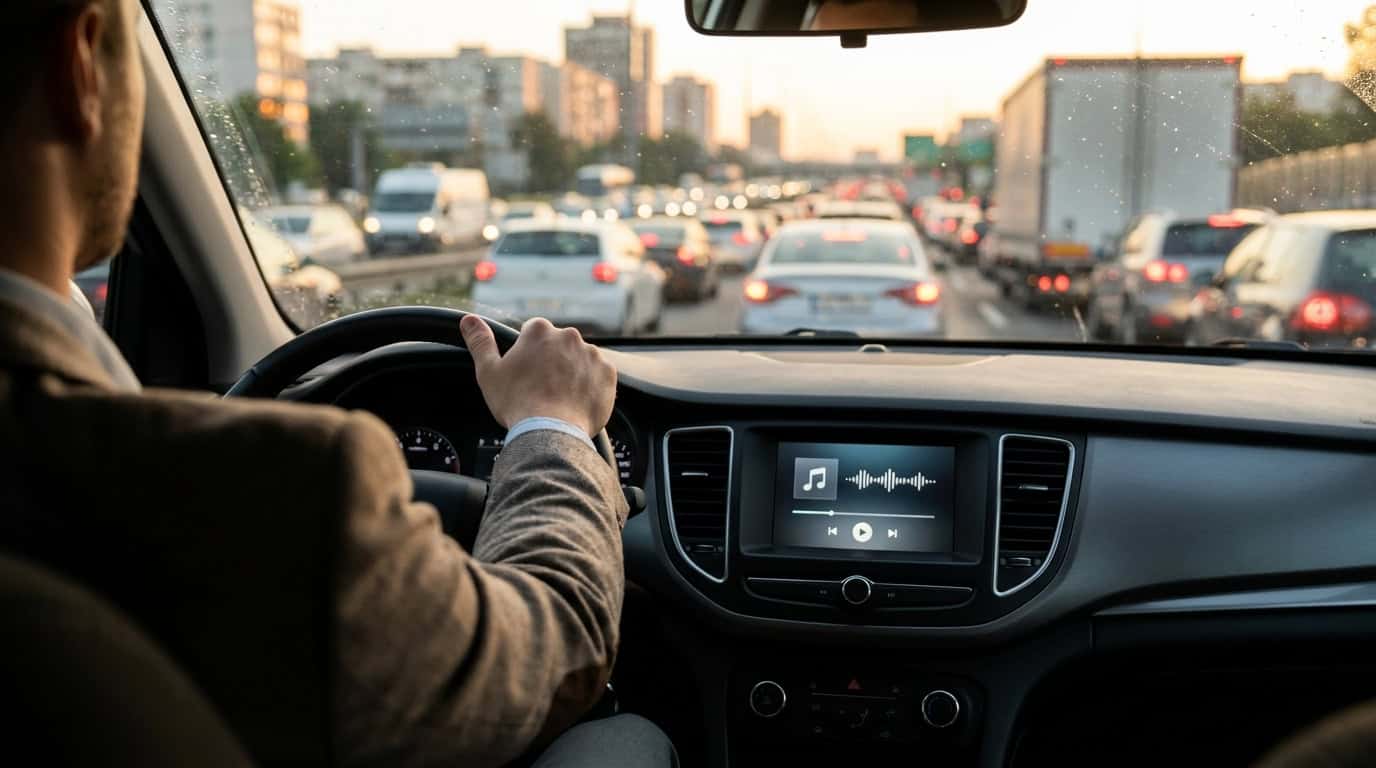
Drive-time radio advertising offers brands a unique opportunity to reach a captive audience at the exact moment they are making purchasing decisions. With the average American spending nearly an hour behind the wheel daily, the morning and afternoon commute dayparts represent a high-concentration window for active consumers who are physically mobile and psychologically focused.
Understanding these mechanics allows marketers to place messages where they resonate most with the audience's current activity. Identifying the optimal window for engagement is the first step toward hardening a brand's presence in the physical marketplace. Strategic media planning leverages daypart dynamics, captive commuter demographics, and precise inventory pricing to maximize brand lift.
Defining Radio Dayparts for Strategic Media Buying
What are radio dayparts? Radio dayparts are specific time blocks into which broadcast schedules are segmented to target different audience demographics and behaviors, such as morning and afternoon drive times.
Media planners segment broadcast schedules into specific blocks to target various listener states of mind throughout the day. While the 24-hour clock remains continuous, radio stations split their programming into distinct blocks that mirror human routines. This segmentation allows advertisers to place messages where they will resonate most with the audience's current activity.
Standard Radio Daypart Schedule and Definitions
Nielsen Audio categorizes the broadcast day into several standard segments that reflect the general habits of the population. Advertisers use these windows to manage their reach and frequency targets effectively. The following schedule represents the industry-standard dayparts used by most terrestrial stations:
- Morning Drive: 6:00 AM to 10:00 AM
- Midday: 10:00 AM to 3:00 PM
- Afternoon Drive: 3:00 PM to 7:00 PM
- Evening: 7:00 PM to Midnight
- Overnight: Midnight to 6:00 AM
Broadcast programming and station personalities undergo significant changes across these blocks to suit the audience's shifting needs. Morning drive programming features high-energy host personalities who deliver rapid-fire news, traffic, and weather segments every 10 minutes. These hosts build appointment listening habits that ensure a consistent audience for national advertisers.
Midday slots usually transition to workplace-friendly formats that focus on continuous music or longer-form talk segments. Media planners carefully select ad placements to match the tone and demographic profile of the listeners present during each specific timeframe. A brand offering breakfast products naturally finds its home in the early morning hours, while entertainment services may prefer the evening or late afternoon blocks.
Strategic placement ensures that the marketing message reaches consumers when they are most likely to consider the product or service. These dayparts provide a framework for advertisers to align their brand voice with the natural cadence of a consumer's workday. By targeting specific windows, brands can optimize their spend and avoid the waste associated with non-targeted airtime.
The Primacy of the Commute: Peak Listening vs. Workplace Audio
There is a critical distinction between the passive listening that occurs in a workplace and the high-attention environment of the drive-time commute. During the midday hours, the radio often serves as background noise while individuals focus on professional tasks or office interactions. Drive-time periods demand a higher level of cognitive engagement from the listener, who is navigating traffic and making active decisions.
Captive Attention and Information Processing
Data from the Nielsen Q1 2025 audio report indicates that consumers spend 66% of their daily listening time with radio within the ad-supported audio universe. This share is significantly higher than the time spent on podcasts or streaming services. The concentration of attention in the vehicle translates to superior message recall for drive-time advertisers.
Listeners are far more likely to absorb and remember an advertisement when they are not simultaneously distracted by emails, meetings, or other office responsibilities. A singular, goal-oriented driving state means your commercial message encounters far less cognitive interference. This sensory exclusivity ensures the radio remains the dominant medium for the duration of the trip.
Anatomy of the Captive Commuter Audience: Why Drive Time Rules the Car
The physical environment of a vehicle creates a unique sensory vacuum that offers significant benefits for radio advertisers. Vehicle isolation creates a captive commuter audience for radio advertisers that digital formats find difficult to replicate. When a consumer is behind the wheel, the radio becomes their primary source of information and entertainment.
The Psychology of the Car: Isolation, Focus, and Receptivity
Nearly 90% of commuters drive alone, fostering a strong emotional connection between listeners and their radios. This isolation turns the car into a private space where the audio content becomes a direct, one-on-one communication. The lack of other passengers allows the listener to connect more deeply with the sounds and messages coming through the speakers.
The driving environment eliminates the multi-screen distraction common at home or in the office. Eyes on the road. Ears on the audio. Drivers have zero room for scrolling through social media. This environment establishes a high-attention state that is perfect for long-term brand building.
Host personalities often feel like trusted daily companions to commuters, fostering a strong emotional connection. Commuters perceive commercial breaks as a natural extension of this relationship rather than a frustrating intrusion. Radio hosts effectively transfer their established credibility directly to the endorsed brands.
Optimizing Afternoon Drive Airtime for Household Decision Makers
The afternoon commute differs from the morning rush because it's generally associated with decompression and leisure. During this afternoon drive time, listeners are transitioning from their professional roles back to their personal and family lives. They are often more relaxed and willing to engage with longer, more creative storytelling in advertising.
Because listeners are heading home, they are in the mindset to make decisions regarding family dining, grocery shopping, or evening entertainment. The afternoon drive is an excellent time for brands to suggest dinner options or weekend activities while consumers are still mobile. The listener's relaxed state allows for a more emotional and narrative approach to brand messaging.
Afternoon drive spots should be used for brands that want to insert themselves into post-work relaxation routines or household planning. Whether it's a luxury car brand or a local home improvement store, the PM drive offers a window to influence long-term household decisions. Capturing the listener's attention during this transition period ensures the brand is top of mind as they return to their families.
Morning vs. Afternoon Drive-Time Radio: Analyzing Consumer Behavior and Ad Performance
The morning and afternoon commutes offer different psychological landscapes that require distinct creative strategies for effective advertising. A listener heading to the office has a different mindset than one returning home at the end of a long day. Successful campaigns acknowledge these nuances by tailoring the copy and tone to match the specific daypart.
Morning Drive (AM Drive): Routine Reinforcement and Immediate Action
The morning rush is characterized by a goal-oriented, highly structured routine in which listeners seek out local news and traffic updates. During this morning commute daypart, the audience is looking for information that will help them navigate their day efficiently. Ads that provide clear solutions or timely offers perform well during these early hours.
Morning drive airtime represents a fresh slate, when consumers make immediate daily decisions about their schedules and spending. The early-morning window is perfect for quick-service restaurants, retail promotions, and urgent services that require a rapid response. Advertisers capitalize on the sense of urgency that defines the morning hours to drive immediate traffic and sales.
Strong host endorsements and high levels of appointment listening during morning shows build deep credibility for brands. Listeners often tune in to the same program every morning, creating a sense of familiarity and trust with the hosts. This environment is conducive to complex brands that require a higher level of consumer confidence.
Understanding Commuter Audience Demographics and Purchasing Power
Understanding commuter audience demographics is essential for brands that want to align their product value proposition with high-income professionals. The daily commute audience is largely composed of employed adults aged 25 to 54. This group represents the core economic engine of the market and possesses high levels of disposable income.
Nielsen reports that radio accounts for 73% of daily ad-supported audio time among people 35 and older. The audience's skew toward homeowners and established professionals makes it an ideal target for high-value brands. These consumers are physically positioned in their vehicles and passing by retail storefronts and auto dealerships daily.
Recent data indicate that radio maintains a strong hold among Black listeners, providing a broad reach across diverse consumer segments. While 73% of global consumers are concerned about rising prices, nearly half still have money left over at the end of the month. This financial stability makes the drive-time audience a primary target for brands looking to drive long-term customer loyalty.
The Mechanics of Radio Advertising Cost Per Spot and Daypart Negotiation
Securing prime advertising space on terrestrial radio requires an understanding of media inventory and rate card economics. Because drive times are the most sought-after slots, the pricing reflects the high demand and limited availability. Media buyers must navigate these costs to build an effective and sustainable campaign.
Technical Metrics: AQH, Cume, and CPP
Media buying is a technical discipline that relies on metrics like Average Quarter-Hour (AQH) persons and Cume persons. High ratings during the commute indicate that more people are tuned in at any given moment than during other dayparts. Advertisers pay a premium because they are reaching a concentrated group of active consumers who respond to the message.
Media planners also evaluate the Cost Per Point (CPP) to determine the efficiency of their spend across different markets. A national or local 30-second ad's CPP can range from $5 to $500, depending on market size. Understanding these figures allows brands to compare radio with other media channels on a level playing field.
Portable People Meter (PPM) data proves the persistent value of these peak slots by providing accurate, minute-by-minute listening statistics. This data, including the three-minute qualifier, helps stations and advertisers understand exactly when listeners are tuned in. The precision of this measurement ensures that brands are getting the reach they paid for during the most valuable parts of the day.
Fixed-Position Spots vs. Radio Rotator Spots
Fixed-position spots are advertisements that are scheduled to run during a specific hour of a premium daypart. This approach gives the advertiser guaranteed reach and control over exactly when the audience will hear their message. While more expensive, fixed positions are necessary for time-sensitive promotions or high-impact brand launches.
In contrast, radio rotator spots are scheduled to run at random times across a broad range of hours and days. While rotators are significantly cheaper, the advertiser sacrifices control over the specific timing and the listener's demographic profile. Rotators can be a cost-effective way to build overall frequency, but they lack the concentrated impact of a dedicated drive-time placement.
A balanced media plan often combines high-impact drive-time spots with cost-effective rotators to maximize the budget. Brands should use fixed positions during peak hours to ensure they reach the core audience when they are most active. Rotators then fill in the gaps and maintain a consistent presence throughout the rest of the week.
Creative Best Practices for Drive-Time Audio
The creative strategy for a radio ad must account for the listener's environment and their likely state of mind. In the car, you aren't just competing with other ads. You are battling traffic noise and the driver's own internal monologue. Effective creative grabs attention quickly and delivers a clear, memorable message that doesn't require a visual aid to understand.
Hard Sell vs. Storytelling Frameworks
A hard-sell approach works best for morning drive spots where listeners are in an active, information-seeking mindset. These scripts should be direct and focus on a single, compelling offer or call to action. The tone should be energetic and professional to match the pace of the morning show environment.
Storytelling frameworks are often more effective during the afternoon commute when listeners are winding down. You can use the extra time in a 60-second spot to build an emotional narrative that resonates with the audience. This approach fosters a deeper connection with the brand and improves long-term recall.
Every drive-time ad needs a clear, easy-to-remember call to action. Vanity URLs and simple phone numbers are much more effective than complex web addresses. Repeating the call to action twice ensures the listener has time to process the information without taking their eyes off the road.
Measuring ROI for Drive-Time Radio: Modern Attribution Models
While creative execution captures audience attention, proving the financial return on that attention requires robust analytics. Many marketers mistakenly believe that offline media is more difficult to track than digital channels. Modern attribution models have evolved to provide precise insights into how terrestrial radio influences the bottom line. Brands use several different mechanisms to correlate their on-air spend with measurable business growth.
Vanity URLs, Promo Codes, and SMS Tracking
Vanity URLs are short, branded web addresses that are dedicated solely to a specific radio campaign. By monitoring traffic to these specific landing pages, brands can see exactly how many visits their drive-time spots generated. Attribution software provides a direct link between the audio placement, Share of Voice, and web-based consumer action.
Custom promo codes allow for even more granular tracking of individual stations or host endorsements. When a customer uses a code at checkout, the advertiser knows which placement drove the transaction. This data is essential for optimizing a media buy and shifting budget toward the highest-performing shows.
SMS keyword codes are another powerful tool for drive-time advertisers because they allow for safe, immediate responses. A listener can text a simple keyword to a short code to receive more information or a discount link. This mechanism captures high-intent leads in real time while the consumer is still in their vehicle.
Geo-Lift Studies and Brand Search Lift
Geo-lift studies involve running radio ads in specific test markets while keeping them off in control markets. By comparing sales performance or web traffic across these regions, brands can isolate the causal lift from their radio spend. This method provides scientific proof of the medium's impact on national growth.
Radio advertising also creates a measurable halo effect on other digital channels. Data often shows a significant lift in branded search queries immediately after a series of drive-time spots air. This suggests that radio serves as a top-of-funnel driver, making search and social media campaigns more efficient.
Adapting Audio Creative for Digital Extensions
Translating successful drive-time audio into visual formats requires a deliberate strategy to maintain brand consistency. When expanding a radio campaign to YouTube or Connected TV, advertisers should use the same voice talent and audio branding cues to trigger immediate recall. This unified approach ensures that the commuter who heard the morning spot instantly recognizes the visual ad later that evening.
Multi-Channel Synergy: Connecting Radio with Connected TV and YouTube Advertising
National radio advertising campaigns achieve their highest performance when they are integrated into a diversified media mix. Radio provides the high-frequency reach needed to build familiarity, while visual channels like Connected TV (CTV) and YouTube add another layer of engagement. This multi-channel approach ensures the brand message is reinforced across various touchpoints.
Bypassing Ad Fatigue and Fragmented Digital Attention
Digital channels are increasingly saturated with ads that users can skip, block, or ignore entirely. Terrestrial radio bypasses these hurdles by offering a stable environment that is naturally resistant to digital friction. Listeners can't install ad-blockers on their car radios, ensuring your message is actually heard by the audience.
Combining audio with visual media helps to combat banner blindness and ad fatigue in the digital space. When a consumer hears a brand during their commute and later sees a visual ad on YouTube, the psychological impact is doubled. This cumulative effect leads to higher conversion rates and a lower total cost per acquisition.
Audio listening trends since the start of 2025 show that radio remains the dominant force in ad-supported audio. This makes it the perfect anchor for any large-scale media plan. By using radio for broad reach and CTV for targeted visual impact, national brands can dominate their category.
According to the latest consumer behavior tracker, vehicle purchase intent and general spending remain resilient in many markets. Radio allows brands to reach these consumers as they move through the marketplace. Integrating these insights into a multi-channel strategy ensures that every dollar spent drives measurable results.
Frequently Asked Questions About Drive-Time Radio Advertising
Addressing the common questions and nuances of radio advertising is essential for a successful first broadcast media plan. Many advertisers have concerns about the timing and effectiveness of their placements in a changing media landscape. Understanding these details helps in making informed decisions that maximize the return on investment.
What is the exact time window for morning and afternoon drive times?
The morning drive typically spans from 6:00 AM to 10:00 AM, while the afternoon drive runs from 3:00 PM to 7:00 PM, Monday through Friday. These windows represent the peak national commuting hours as tracked and reported by Nielsen. Advertising during these specific times ensures the highest possible concentration of active, mobile consumers.
Why can't I buy cheap overnight or evening rotator spots?
While overnight and evening rotators offer lower rates, they reach a vastly diminished and fragmented audience compared to peak hours. Saving on budget by choosing cheap spots at the expense of reach will ultimately harm the campaign's overall return on investment.
Success in radio advertising requires reaching a concentrated group of active consumers, which is only possible during the primary drive-time dayparts.
Is drive-time radio advertising effective if younger audiences are streaming music?
While younger demographics use streaming apps, over 90% of in-car ad-supported listening is still dominated by traditional AM/FM radio. This is partly due to the presence of older vehicles on the road that lack integrated streaming technology. For broad market awareness and targeting working professionals, terrestrial radio remains an unmatched tool for reaching a diverse audience.
How does Mynt Agency optimize drive-time media buying to manage costs?
Mynt Agency uses over 10 years of placement data and proprietary research tools to negotiate custom-blended schedules for our clients. By combining premium drive-time spots with strategic rotators and connected audio, we maximize frequency while maintaining a cost-efficient media buy. Our approach ensures that every dollar spent is directed toward reaching the most valuable consumers in your market.
Partner with Mynt Agency to Launch Your Next Radio Campaign
Drive-time dayparts deliver a highly concentrated and affluent audience of active consumers that digital media often struggles to reach. The unique environment of the car creates a captive audience that is focused, receptive, and physically positioned to make immediate purchasing decisions. While these premium slots require a higher investment, the resulting brand lift and direct action make them a foundational part of any successful media plan.
Securing the best value for your campaign requires a strategic approach to daypart negotiation and inventory management. By balancing high-impact drive-time placements with cost-effective rotators, you can build a schedule that yields maximum reach and frequency. Navigating the complexities of rate cards and ratings data is much easier with an experienced partner who understands the nuances of the broadcast landscape.
Mynt Agency is ready to serve as your media buying partner to plan and optimize your next large-scale radio campaign. We combine our extensive placement data with exclusive research tools to ensure your brand reaches the right audience at the right time. Contact us today to develop a customized media plan that integrates drive-time radio with YouTube and Connected TV for a truly high-impact, national campaign.
