
- Programmatic TV advertising uses automated, data-driven software to replace manual media buying, allowing brands to deliver personalized campaigns across fragmented multi-screen environments.
- Enterprise marketers are shifting toward household-level targeting and behavioral insights to move beyond broad age and gender demographics for more surgical ad placement.
- Automated platforms provide real-time optimization and cross-platform frequency capping, ensuring that television budgets are spent efficiently by reducing wasted impressions.
- The integration of identity graphs and Dynamic Ad Insertion technology allows for seamless, high-quality ad delivery while providing advanced measurement and attribution for television campaigns.
Programmatic TV advertising is the automated, data-driven method of buying and placing TV ads. It uses detailed audience insights to deliver personalized, cross-platform campaigns that reach viewers where they're most engaged. This technology allows brands to layer data and automation onto the massive reach of television so every impression works harder. Keep reading to learn more about programmatic TV advertising.
The US programmatic advertising market was recently valued at $ 155 billion. This growth is driven by digital ad adoption and tech advancements that prioritize data-driven strategies. Enterprise marketers are moving away from manual processes to embrace these automated systems. Transitioning to software-based buying helps brands stay agile in a rapidly changing media landscape.
Understanding the New Era of Television Advertising
The current media landscape is shifting toward a model where specific audience data backs every ad placement. Traditional methods can't keep up with the speed of modern digital consumption. Programmatic TV automates ad placement to ensure content reaches the most relevant viewers. This approach makes campaigns more repeatable and scalable for large organizations.
The Paradigm Shift for Enterprise Brands
The transition from manual negotiation to automated exchanges marks a significant shift for enterprise brands. North American programmatic markets are expected to reach nearly $400 billion by 2031. This growth reflects a widespread desire for more efficient and transparent media buying workflows. Software now handles the heavy lifting that once required hundreds of man-hours.
This guide provides a deep dive into the technologies and strategic shifts that are making traditional manual buying obsolete. You'll learn how the programmatic ecosystem operates and why it offers superior performance metrics. We'll explore the various platforms that facilitate these trades and the data that fuels them. Understanding these components is the first step toward modernizing your advertising efforts.
Enterprise marketers must adapt to these changes to maintain their competitive edge in a crowded marketplace. Relying on legacy systems often leads to wasted budget and missed opportunities with key demographics. Programmatic solutions offer the precision needed to reach fragmented audiences across multiple devices. This resource explains how to navigate this new era with confidence and clarity.
The Evolution of the TV Media Landscape
Television advertising has come a long way since its early days of experimental broadcasts. The industry was built on a foundation of linear buying, where slots were purchased months in advance. These legacy systems relied on broad estimations rather than precise data. Technological advancements eventually created a demand for faster and more accurate ways to reach viewers.
From Manual Insertion Orders to Automated Exchanges
For several decades, the industry relied on manual insertion orders and physical paperwork to trade ad space. Negotiations often happened over the phone or via fax machines between agencies and network representatives. This process was incredibly slow and prone to human error at every stage. It created friction that limited a brand's ability to respond quickly to market changes.
Manual buying made it difficult for brands to be agile with their messaging or budget allocation. If a campaign wasn't performing, it could take weeks to make meaningful adjustments. The digital ad tech revolution eventually showed the industry a better way to operate. Automation began to replace these clunky workflows, offering a more streamlined path to purchase.
The rise of digital exchanges allowed for the buying and selling of ads in fractions of a second. This efficiency soon migrated from web browsers to the television screen. Today, the reliance on faxed orders has mostly disappeared in favor of sophisticated software platforms. These exchanges allow for a level of transparency and speed that was previously unimaginable.
The Rise of Multi-Screen Viewing Habits
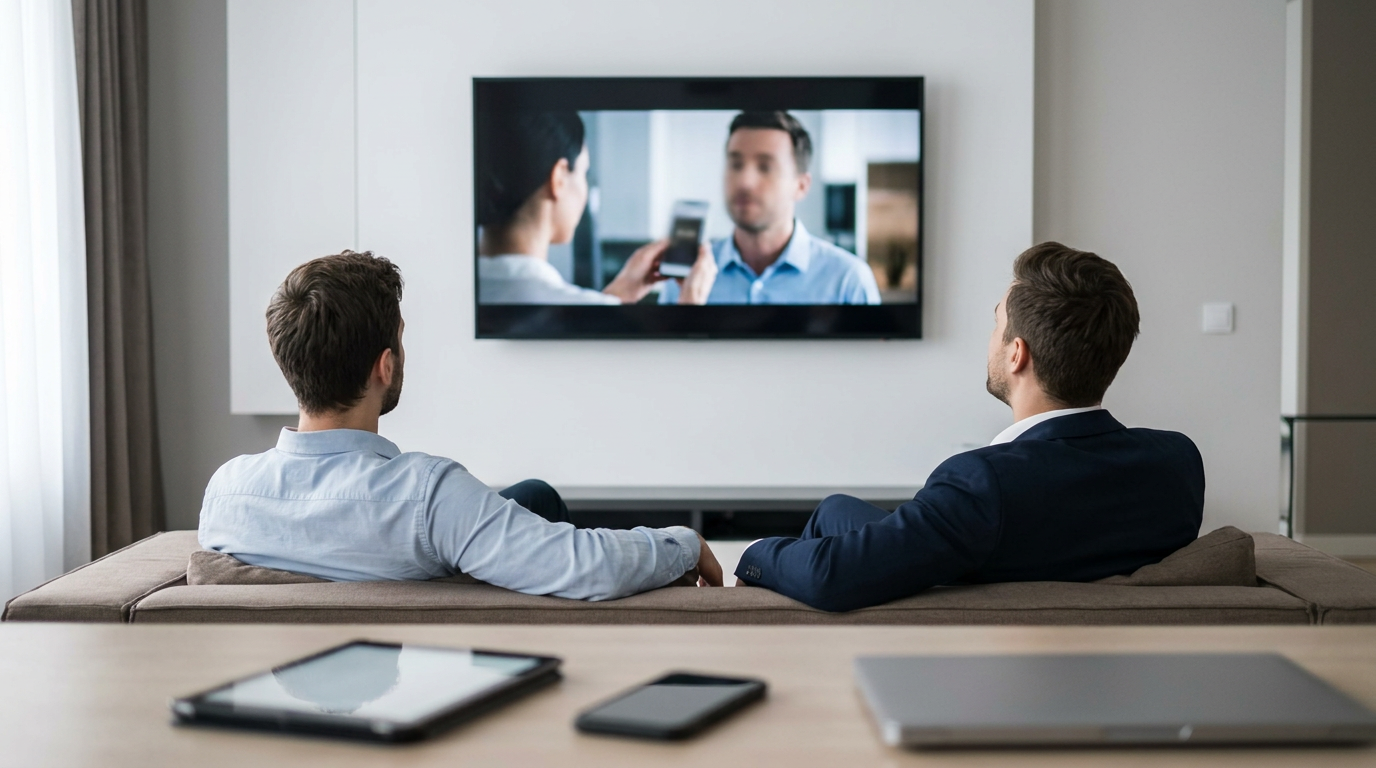
Consumer behavior has shifted dramatically with the proliferation of smartphones and connected devices. People no longer sit in front of a single screen to consume their favorite shows. They often browse on a tablet or check their phones while watching a big-screen television. This behavior has led to a fragmented audience that's harder to track with traditional methods.
As audiences spread across various screens, a unified way to reach them became necessary. Traditional broad-reach buying began to lose its effectiveness because it couldn't account for shifting consumer habits. Marketers needed a way to follow the viewer from the living room to the mobile device. Automation provided the tools to manage this multi-screen reality effectively through reach and frequency in CTV ad targeting strategies.
Fragmentation has made it nearly impossible to rely on a single channel for brand awareness. A cohesive strategy now requires a presence across multiple platforms and hardware types. Programmatic buying allows brands to coordinate these efforts from a central location. It ensures that the right message reaches the right person regardless of which device they're using.
Why Programmatic Is Replacing Traditional Media Buying
Traditional media buying is often hampered by slow processes and a lack of transparency. The legacy system wasn't designed for the speed or data requirements of the modern world. When evaluating programmatic vs traditional TV, the primary differentiator is the ability to move from broad estimations to household-level precision. Marketers are moving toward these systems because they provide better results for less effort.
Moving Beyond Age and Gender Demographics
The traditional Nielsen rating system relied heavily on broad age and gender buckets for its measurements. It used small groups of families who kept diaries of their viewing habits to estimate the total audience size. This model is no longer sufficient for brands that need to reach specific niche audiences. Relying on such broad data often yields many irrelevant impressions.
Programmatic TV allows for behavioral targeting based on actual purchase history and intent data. You can reach people based on their interests, such as luxury travel or organic gardening. This results in much higher relevance for the viewer and better efficiency for the brand. It's a move away from spray-and-pray advertising toward a more surgical approach.
Using data signals like context and audience value makes every ad placement more meaningful. You aren't just buying a spot on a show, you're buying access to a specific type of person. This shift has fundamentally changed how brands plan their media strategies. It enables a level of personalization previously reserved for digital display ads.
Real-Time Optimization vs. Fixed Commitments
Traditional TV upfronts require brands to lock in their budgets months before an ad ever airs. This rigidity makes it impossible to adjust to changing market conditions or unexpected events. If a campaign is underperforming, the marketer is often stuck with the original plan. This lack of flexibility is a major disadvantage in a fast-paced business environment.
Programmatic buying allows marketers to optimize their campaigns mid-flight with ease. You can shift budget away from underperforming networks or dayparts in real-time. If a specific creative isn't resonating, it can be replaced or adjusted almost instantly. This agility ensures that your budget is always being spent in the most effective way possible.
Automated decisioning uses real-time signals to inform every impression decision. The system can evaluate a viewer's value the moment they start watching. This allows for a dynamic approach to media buying that traditional commitments can't offer.
Consolidating Reach and Frequency Across Platforms
Managing frequency capping is a major challenge in a fragmented media world. Recent data shows that a small percentage of households often receive a disproportionate number of impressions. These over-saturated households can account for more than half of a campaign's total impressions. This waste occurs because traditional systems can't track exposure across different apps and devices.
Marketers are eager for better frequency capping, with many saying it would increase their spend. Programmatic platforms solve this by using cross-platform identity graphs. Identity graphs link household devices to maintain an accurate count of ad exposure. It ensures that you aren't annoying your audience with the same ad fifty times a week.
Consolidating your reach across platforms also helps you find new audiences you might have missed. Instead of hitting the same people on multiple networks, you can spread your message more effectively. This holistic view of the campaign leads to better brand sentiment and a more efficient use of capital. It's a smarter way to build brand awareness in a multi-screen world.
Overcoming the Challenges of Programmatic TV
While the benefits are clear, the transition to programmatic TV isn't without its difficulties. The landscape is still evolving, and marketers must navigate several hurdles to be successful. Fragmentation and a lack of universal standards can make measurement a complex task. It requires a dedicated effort to ensure that your data is accurate and your campaigns are effective.
Fragmentation of Platforms and Standards
The rise of walled gardens has created barriers that prevent easy data sharing across platforms. These services use proprietary technology to keep their audience insights within their own systems. This makes it difficult for marketers to get a unified view of their entire campaign's performance. You might have to use different tools to measure results on different streaming apps.
Multiple walled garden solutions persist because creating a uniform industry standard is challenging. Each manufacturer and platform wants to maintain control over its exclusive data. This complexity can be frustrating for teams trying to compare the value of different inventory sources. It requires a more sophisticated approach to measurement to bridge these gaps.
Understanding ACR and Ad-ID Technology
Automated Content Recognition technology is one way the industry is fighting this fragmentation. ACR measures what's hitting the screen regardless of the source or the device. It functions at the hardware level within smart TVs to provide glass-level data. This technology recognizes audio or video fingerprints to identify exactly what the viewer is watching in real-time.
The adoption of Ad-ID is also helping to standardize the identification and encoding of ad assets. This standard system simplifies and improves the precision of viewership data reconciliation across multiple platforms. Without a universal identifier, tracking an ad across different walled gardens is nearly impossible. These technologies work together to provide the holistic view that enterprise marketers require.
Ensuring Brand Safety and Reducing Ad Fraud
CTV has become a hotspot for invalid traffic because of the high value of its ad inventory. Bad actors may use bots to generate fake views and steal advertising dollars. Marketers must use verified vendors and accredited measurement tools to detect this invalid traffic. It's the only way to ensure that real humans are seeing your message.
Industry standards such as app-ads.txt and sellers.json help buyers verify that inventory is legitimate. These tools allow you to prioritize direct supply paths and avoid spoofed inventory. Using private marketplaces also significantly reduces the risk of fraud compared to the open exchange. It's a more controlled environment that protects your brand and your budget.
Post-bid monitoring services analyze every impression for fraud signals and viewability risks. They report on whether your ad was served on a brand-safe page or alongside harmful content. This constant vigilance is necessary to maintain the integrity of your marketing efforts. By using these tools, you can invest in programmatic TV with peace of mind.
Defining Programmatic TV Advertising
Programmatic TV refers to the use of software and data to automate the buying and delivery of television ads. It moves the industry away from manual negotiations and toward an algorithmic approach. This method ensures that ad placements are based on real-time insights rather than historical guesses. It's a fundamental change in how the industry values and trades media inventory.
What is Programmatic Linear TV?
Programmatic linear TV is the automated bidding or buying of ad slots on traditional broadcast and cable networks. Linear TV automation allows legacy broadcast networks to modernize their ad inventory by applying digital bidding logic to traditional schedules. While the delivery remains linear, the entire buying process is digital and automated. These platforms identify shows that index high for a target audience's specific interests.
Companies like Comcast have introduced workflows that apply programmatic bidding to their entire linear inventory. This allows for actual real-time bidding against targeted audiences on traditional channels. It mirrors how standard programmatic works on connected television and other digital platforms. Marketers no longer have to settle for broad bundles of inventory that might not fit their needs.
Roughly three-quarters of all connected TV transactions are now handled through programmatic methods. This high percentage indicates that automation is the standard method of execution in modern television. It's no longer a niche tactic for experimental budgets. Programmatic has become the primary way that sophisticated brands interact with the television medium.
Exploring Connected TV (CTV) and Over-the-Top (OTT) Advertising
It's helpful to distinguish between CTV and OTT as these terms are often used interchangeably. CTV refers to the actual device used to watch content, such as a smart TV or a gaming console. These ads are typically viewed on large screens where viewer attention and engagement are much higher. Co-viewing is also more likely on these devices, increasing the effective reach of an ad.
OTT refers to the service or content delivery method that travels over the internet. Popular examples include Netflix, Hulu, and other streaming apps. These ads can be served on mobile devices and desktops with 100 percent viewability. Because they run full screen, they capture the user's focus even on smaller personal devices.
The programmatic revolution is largely driven by the growth of these two categories. They provide the digital infrastructure needed for precise targeting and real-time optimization. Marketers can use these platforms to deliver high-quality video content with the same precision as a search ad. This combination of sight, sound, and data is incredibly powerful for brand building.
Addressable TV and Household-Level Targeting
Addressable TV allows different ads to be shown to different households watching the same program. It utilizes set-top box data to enable granular targeting that was once impossible in broadcast models. Two neighbors watching the same football game might see two completely different commercials. This technology makes every second of airtime more relevant to the specific viewer.
This method relies on partnerships with multichannel video programming distributors like Comcast and DirecTV. These providers insert household-specific ads during local ad slots throughout the day. This typically occurs for about 2 minutes per hour via dynamic ad insertion technology. It's a highly efficient way to reduce wasted impressions on households that aren't in the market.
Nielsen's addressable platforms now integrate technology that recognizes linear signals at the glass level. It doesn't matter if the signal comes from a set-top box or an antenna. This allows for accurate addressable replacements on a wide variety of hardware. It's a significant step toward making all television advertising as targeted as the digital web.
Dynamic Ad Insertion (DAI) Technology
Dynamic Ad Insertion technology is the engine that powers seamless ad delivery in digital streams. DAI enables frame-accurate ad replacement in both live and on-demand video content. This process happens on the server side, ensuring that the transition between content and commercial is invisible to the viewer. It eliminates the buffering or lag often associated with traditional client-side ad serving.
For live events, DAI uses SCTE-35 markers to identify exactly when an ad break begins and ends. This allows the system to replace the generic broadcast signal with a targeted ad unit. Because the replacement happens in the cloud, the viewer receives a continuous high-quality stream. This technology is critical for maintaining the premium feel of the television experience in a digital environment.
How the Programmatic TV Ecosystem Operates
The programmatic ecosystem functions through a series of connected technologies known as the ad tech stack. These platforms facilitate the automated buying and selling of inventory. Each player in the stack has a specific role in ensuring the ad reaches the right viewer. It's a complex system that operates with incredible speed and precision.
The Role of Demand-Side Platforms (DSPs)
A Demand-Side Platform is a software-based tool that allows advertisers to buy digital inventory from multiple exchanges. Demand-Side Platforms evaluate ad inventory in real-time to make informed bidding decisions. Enterprise marketers use DSPs to manage their accounts and set parameters for their campaigns. It's the primary interface where the buying strategy is implemented and managed.
DSPs use sophisticated algorithms to evaluate available inventory within milliseconds. They look at the advertiser's budget, target audience, and campaign goals to make quick decisions. This ensures that the ad reaches the right person at the most appropriate time. The DSP acts as the brain of the operation for the buyer's side of the transaction.
For programmatic TV, these platforms can bid the moment a user begins streaming. If the impression matches the desired audience segment, the DSP immediately submits a bid. Even for guaranteed deals, the pricing and delivery still run through these digital pipes. This creates a consistent workflow across all types of media buys.
Supply-Side Platforms (SSPs) and Media Owners
Supply-Side Platforms provide media owners with a unified interface to manage their ad inventory. Publishers use these tools to fill ad slots and maximize the revenue they earn from their content. The SSP gives them centralized control over who can buy their space and at what price. It's the essential tool for any network or streaming service looking to monetize its platform.
The core functions of an SSP include inventory management and integration with multiple DSPs. They manage the auction process and set price floors to protect the media's value. This ensures that the publisher doesn't sell their premium space for less than it's worth. Reporting features also help them track revenue performance and fill rates in real-time.
Modern SSPs use dynamic pricing strategies to adjust minimum bids based on historical demand. If competition for a specific audience is high, the platform can raise the entry price. This sophisticated management helps publishers get the most out of every available impression. It creates a fair and transparent marketplace for both the buyer and the seller.
Data Management Platforms (DMP) and Audience Orchestration
A Data Management Platform is a unified tool for collecting and organizing audience data. It ingests information from first-party, second-party, and third-party sources to create detailed profiles. These profiles then inform the buying decisions made within the DSP. It's the fuel that allows for the high level of targeting found in programmatic advertising.
DMPs allow marketers to expand their reach by building lookalike audiences based on their best customers. They can also be used to suppress existing customers so a brand isn't paying to reach people who've already purchased. This level of control improves targeting precision and reduces wasted spend. It's the primary way that data is turned into actionable marketing intelligence.
The synergy between data and automation is what makes the programmatic model so successful. Without a DMP, the automated bidding system wouldn't know who it's bidding on. By combining these tools, brands can orchestrate complex campaigns that span multiple channels. It creates a seamless experience for the viewer while maximizing the brand's impact.
Strategic Benefits for Enterprise Marketers
The shift to programmatic TV provides significant high-level business advantages for major brands. CMOs are increasingly looking for ways to tie their television spend to actual business outcomes. Programmatic platforms provide the data and control needed to make that link.
Enhanced Measurement and Attribution
Programmatic TV allows for a shift from estimated reach to actual, verified impressions. This enables better attribution modeling for cross-channel campaigns, so you can more easily link an ad exposure to a specific action. You can see a clearer connection between a TV spot and a website visit or an app download. It's no longer a mystery whether your television ads are actually driving traffic.
View-through attribution measures what people do in the hours or days after seeing your ad. It links large-screen exposure to behaviors on other personal devices. This helps you understand the full customer journey before they make a purchase. You can track everything from initial interest to the final conversion.
Multi-touch attribution goes even further by sharing credit across all touchpoints in the journey. It reflects the reality of an omnichannel world where a customer might see a TV ad, then a social post, then a search ad. This model gives you a more accurate picture of how your different marketing channels work together. It's the key to truly understanding the ROI of your advertising spend.
Access to Premium Inventory at Scale
There's a common myth that programmatic is only for remnant or low-quality ad space. In reality, private marketplaces give enterprise brands automated access to premium, brand-safe content. These PMPs allow top publishers to invite select buyers to bid on their most valuable inventory. It combines the quality of the upfronts with the efficiency of modern automation.
The industry is seeing a notable shift from open auctions to these more controlled private deals. Private marketplace spend has overtaken open exchanges as advertisers seek better control and performance. The data shows a shift from 41% PMP spend in 2023 to 59% in 2024. This trend ensures that your ads run alongside high-quality programming that aligns with your brand values.
Having direct access to premium inventory at scale allows for massive brand-building campaigns. You can reach millions of people across major networks while still using precise targeting. This level of scale was once the sole domain of the manual buying process. Now, it's available through the same automated pipes used for digital display and video.
Improved Transparency and Cost Efficiency
Automated platforms provide a high level of transparency regarding where your ads are running. You can see exactly which networks and shows your message appeared on and how much you paid for each. This visibility helps ensure that your dollars reach the intended audience. It's a major upgrade from the opaque reports often provided by legacy systems.
Removing manual intermediaries in the buying process often leads to better cost efficiency. Every person who handles an insertion order manually adds a layer of cost to the transaction. By using software to facilitate the trade, you can allocate more of your budget directly toward media. This allows you to reach more people with the same investment.
Efficiency also comes from the ability to quickly cut underperforming segments. You're no longer paying for impressions that don't meet your performance standards. This proactive management of the budget ensures that every dollar is working as hard as possible. It's a more responsible way to manage the large budgets typical of enterprise brands.
Predictive Buying and AI Integration
Artificial intelligence is playing an increasing role in optimizing both creative and buying strategies. AI can analyze millions of data points to predict which ad will perform best for a specific viewer. It can even help brands create personalized versions of their commercials in real-time. This level of creative optimization will make television ads more effective than ever before.
Predictive buying allows brands to secure the best inventory before their competitors even see it. The system will learn from past performance to identify the most valuable opportunities in advance. This move toward a fully automated and intelligent ecosystem is inevitable. Brands that embrace these changes today will be the leaders of tomorrow's media landscape.
Evaluating Programmatic TV ROI for Enterprise Brands
Justifying the transition from legacy systems to programmatic software requires a focus on measurable cost efficiency. Enterprise brands often find that while the initial technology setup requires investment, the waste reduction is substantial. Programmatic TV ROI is often calculated by looking at the effective cost per verified impression. This model provides a much more accurate picture of budget health than traditional ratings.
Attribution models for CTV allow marketers to track the customer journey across multiple touchpoints. This level of granularity helps brands identify which specific networks or dayparts are driving the most value. By continuously optimizing for ROI, brands can ensure their television spend remains efficient and effective. It transforms the big screen into a performance channel that delivers tangible business growth.
Case Study: Colgate-Palmolive and GroupM
Real-world examples demonstrate the tangible power of programmatic targeting for major global brands. GroupM recently executed a campaign for Colgate-Palmolive using AMC lookalike audiences to drive results. They seeded the lookalike model with first-party signals representing the top 10 percent of high-value spenders. This strategy allowed them to reach millions of prospects who shared characteristics with their best customers.
The results of the campaign were significant and proved the efficiency of data-driven targeting. The lookalike audience delivered a 21 percent higher return on ad spend compared to standard lifestyle segments. This case study highlights how precision targeting can drastically improve the performance of a television campaign. It shows that first-party data is a critical component for achieving enterprise-level results.
The Role of Data and Identity in Modern TV Ads
Data is the fuel that makes the entire programmatic TV system function properly. Without accurate information about who's watching, the automation has no direction. Identity resolution is the process of linking various digital signals to a single person or household. This is particularly important in a world where traditional cookies are becoming less relevant.
Leveraging First-Party Data for TV Campaigns
Brands can use their own customer data to find lookalike audiences on television. This includes information from CRM lists, loyalty programs, and website interactions. By matching this data against a streaming platform's user base, you can find people similar to your best customers. It's a highly secure, privacy-safe way to expand your reach while focusing on brand vs. performance elements in direct-response ads.
Using first-party signals can lead to a significant increase in return on ad spend. As seen in the Colgate-Palmolive example, lookalike audiences often significantly outperform broad targeting. It allows you to focus your efforts on the prospects who are most likely to convert. This direct connection between your customers and their viewing habits is incredibly valuable.
Because CTV operates in a digital environment, this integration is both precise and scalable. You aren't guessing who might be interested in your product based on the show they're watching. You're using actual behavioral data to drive your media buying decisions. It's a more scientific approach to brand building that leads to more predictable results.
Third-Party Data Partnerships and Niche Targeting
Third-party data providers offer a wealth of information that can be integrated into your buying decisions. You can reach people based on their automotive intent, credit card spending, or life stages. This allows for hyper-niche targeting, such as reaching luxury SUV shoppers or organic food buyers. It's a level of specificity that traditional TV cannot achieve.
DMPs connect to these data brokers to expand your target audiences during campaign planning. You can use lookalike modeling to identify new prospects who share characteristics with your niche groups. This helps you find hidden audiences that you might not have considered before. It's an excellent way to grow your brand beyond its traditional core demographics.
This data-driven approach ensures that your message is always relevant to the person seeing it. When people see ads that align with their actual interests, they're more likely to engage. It improves the overall viewer experience while driving better results for the advertiser. It's a win-win scenario that's only possible through programmatic automation.
Navigating Privacy and Compliance in Automated Buying
Privacy regulations like GDPR and CCPA have changed how the industry handles personal data. GDPR is built on an opt-in model that requires explicit consent before data can be processed. CCPA operates on an opt-out basis, allowing consumers to direct businesses not to share their information. Navigating these rules is essential for any brand operating in the programmatic space.
Consent Management Platforms are now a standard piece of the ad tech stack. They request and store user preferences and signal them to vendors during the bidding process. This ensures that every ad served is compliant with local and international laws. It's a critical component for maintaining consumer trust in a data-driven world.
The industry is also moving toward clean rooms and contextual advertising as privacy-safe alternatives. Contextual targeting places ads based on the content being watched rather than personal data. This method is inherently privacy-friendly because it doesn't require tracking the individual viewer. It's a reliable way to reach audiences while fully respecting their privacy.
How to Get Started with a Programmatic TV Strategy
Transitioning to programmatic requires a mix of new internal skills and external partnerships. You can't simply apply your old manual buying habits to these new automated systems. It requires a different mindset that focuses on data, optimization, and real-time decision-making. Setting a strong foundation is the key to long-term success in the space.
Choosing the Right Ad Tech Partner
The most important criteria for choosing a partner should be transparency and access to data. Selecting a specialized TV advertising agency is critical for enterprise brands that want to bridge the gap between creative storytelling and complex media buying software.
A good partner will help you navigate the complex world of DMPs, SSPs, and attribution models. They should provide clear, actionable insights rather than just raw data. You want a team that acts as an extension of your own, working toward your specific business goals. Their expertise should fill the gaps in your internal team's knowledge.
Don't be afraid to ask deep questions about their technology stack and their data sources. You want to ensure they're using high-quality third-party data and secure first-party integrations. Their approach to brand safety and fraud prevention should be proactive and comprehensive. The right partner will give you the confidence to scale your programmatic efforts.
Setting Realistic Goals and KPIs
Defining success in the programmatic world often requires a shift in the metrics you track. Traditional Gross Rating Points may still be useful, but they should be supplemented with digital KPIs. Metrics like completion rates and cost-per-completed-view provide a more accurate picture of engagement. Conversion lift is also a powerful way to see the actual impact on your sales.
Success doesn't happen overnight, and it's important to set realistic expectations for your initial campaigns. You should focus on learning and optimization during the first few months of a transition. Use the data you gather to refine your targeting and your creative messaging. This iterative process is what leads to significant long-term growth.
Make sure your KPIs align with your overall business objectives, whether that's brand awareness or direct sales. Programmatic TV is flexible enough to support a wide range of marketing goals. By tracking the right data, you can prove the value of your TV spend to the rest of the organization. It changes the conversation from how many people saw this to how much did this grow our business.
The Future of Television Advertising
The future of the industry points toward the total automation of all media-buying processes. The line between what we call TV and what we call digital will eventually disappear completely. All screens will be connected, and all inventory will be traded through automated exchanges. This will create a single, unified marketplace for all video advertising.
The US programmatic advertising market will continue to lead this transformation through technical innovation. Advanced data models will allow for even more granular targeting at the household level. As software becomes more intelligent, the efficiency of every ad dollar will increase. This evolution will benefit both brands and viewers by providing more relevant content.
Finally, the growth of the North America programmatic sector is expected to reach new heights by 2031. Brands that invest in these technologies today will be better positioned for long-term success. Automation is no longer an optional tactic but a necessary foundation for modern television advertising. The transition marks a permanent shift in how the world consumes and interacts with media.
Speak To Mynt Agency About A Programmatic TV Campaign
Programmatic TV advertising represents the necessary evolution for brands seeking efficiency and data-backed results. Traditional manual buying cannot compete with the speed and precision of automated exchanges. Our team at Mynt Agency provides the specialized expertise required to navigate the complexities of TV, YouTube, and Connected TV advertising. We bring over 10 years of experience in launching and optimizing large-scale media campaigns for national and international brands.
We invite you to leverage our proprietary research tools and deep industry knowledge to stay ahead of the competition. Our expertise helps you bridge the gap between creative storytelling and the high-tech requirements of modern media buying. We focus on delivering measurable revenue spikes and verifiable results for every client we serve. Our commitment to transparency ensures your advertising budget works as hard as possible across every screen.
If you're ready to modernize your approach, we're here to help you audit your current buy and implement an automated strategy. Contact us today to learn how our specialized services can streamline your television advertising efforts. Let us help you turn the power of programmatic automation into a competitive advantage for your brand.

