
- Addressable TV advertising leverages set-top box hardware from MVPDs like Comcast and Spectrum to deliver targeted ads to specific households during linear broadcasts.
- Connected TV (CTV) involves streaming video content via the internet on devices like Smart TVs and gaming consoles, with ad spend projected to reach $33.48 billion by 2025.
- While addressable TV utilizes verified first-party subscriber data from cable providers, CTV targeting relies on digital signals like IP addresses and unique Device IDs to reach audiences based on online behavior.
- Research indicates that CTV campaigns generate approximately 23 percent higher ROI than traditional linear campaigns, while addressable TV ads boast a high image recall rate of 74 percent.
- Modern advertisers achieve the best results by combining the household-level precision of addressable TV with the massive scale and digital-first tracking capabilities of connected TV advertising.
Television media buying is evolving as viewers abandon traditional broadcast schedules in favor of more flexible digital alternatives. Advertisers now face a complex environment where the distinction between addressable and connected TV often feels blurred. It's a shift that requires a deeper understanding of addressable TV vs connected TV to ensure your budget is used effectively.
The industry-wide move toward precision marks a fundamental change in how television inventory is valued and purchased worldwide. Modern brands can no longer rely on broad demographics to reach their target audiences on the big screen. The following sections explore the technical and strategic distinctions between addressable and connected TV environments.
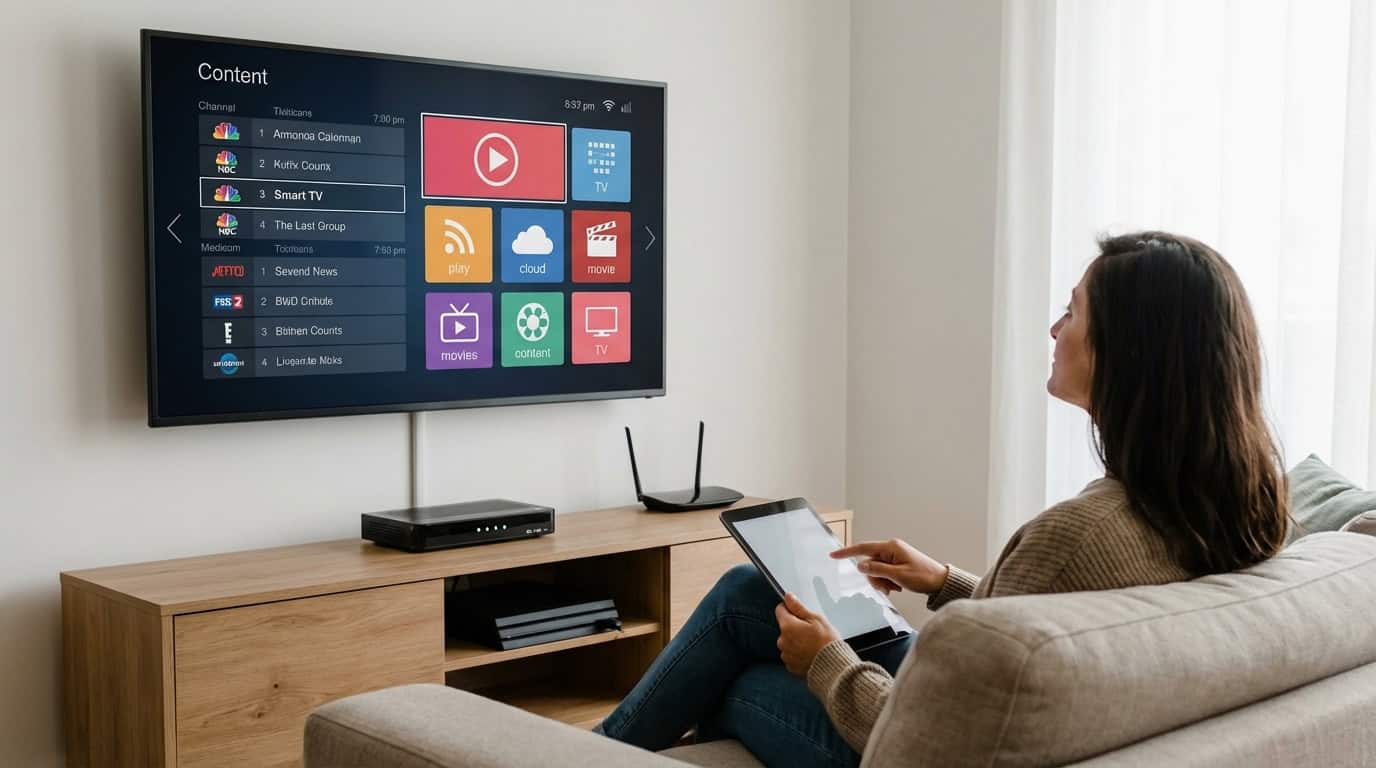
Understanding Addressable TV: The Power of the Set-Top Box
Addressable TV is a specific subset of linear television that allows for targeted ad delivery at the household level. While the content appears to be a standard broadcast program, the underlying technology enables different ads to be shown to different households watching the same show. The addressable approach bridges the gap between traditional TV reach and digital precision.
The Role of MVPDs in Addressable Advertising
Multichannel Video Programming Distributors, or MVPDs, play the most significant role in the addressable TV ecosystem. These companies, such as Comcast, Spectrum, and Cox, control the physical set-top box hardware found in millions of homes. Addressable TV utilizes set-top boxes to map digital identifiers to physical locations for precise delivery.
Set-top box hardware serves as the gateway for ad delivery, allowing providers to replace national commercial spots with targeted ones. The global set-top box market remains substantial, valued at $24.84 billion in 2024. The global set-top box market is projected to reach $33.13 billion by 2033 as infrastructure continues to modernize.
These providers leverage their direct-billing relationships to build accurate first-party household datasets. Because they have verified home addresses and subscription details, they can create reliable segments for advertisers. Deciding between set-top box and streaming inventory depends on whether the target audience consumes linear cable programming or digital-first applications.
Linear Addressable vs. Video On Demand
The technical process of linear addressable advertising involves swapping a national ad for a targeted one during a live broadcast. The ad substitution occurs within the set-top box hardware, ensuring the viewer never notices a break in the stream. It's a sophisticated ad-stitching process that occurs locally on the device based on pre-downloaded instructions.
Video-on-Demand environments offer a distinct addressable opportunity within the cable ecosystem. When a user navigates these menus, the ads they see are also targeted to their specific household profile. The user experience is more interactive, though it remains within the provider's controlled environment.
Accessing this inventory often requires specific partnerships because of the walled-garden nature of these platforms. Advertisers can't simply buy this space through a standard open exchange like they might with web-based video. Instead, they must work directly with the MVPDs or specialized aggregators who have negotiated access to these premium slots.
Defining Connected TV (CTV): Advertising in the Streaming Era
Connected TV serves as an umbrella term for any hardware device that connects to the internet to stream video content, regardless of the specific app or service used. Distinguishing CTV from addressable TV requires an understanding of how hardware processes data signals.
The CTV Device Ecosystem
Smart TVs with integrated operating systems account for a large share of the CTV market today. Platforms like Samsung Tizen allow users to download streaming apps directly onto their television without extra hardware. These systems give manufacturers direct access to viewing data and ad placement opportunities.
Peripheral streaming devices also serve as a major gateway to digital content for many households. Devices like the Roku and Apple TV are popular because they offer a consistent interface across different television brands. They're updated more frequently than built-in software, providing a smoother user experience for the viewer.
The surge in cord-cutting among broadband-only (BBO) households has driven 233.9 million people, or 68.4% of the population, to streaming in 2024. These sticks and boxes are central to this shift as audiences look for more flexible content options. As more people upgrade their home setups, these integrated systems are becoming the primary way audiences consume media.
Gaming Consoles and Viewer Engagement
Gaming consoles like the PlayStation and Xbox shouldn't be overlooked as significant entry points for streaming. While their primary purpose is gaming, they function as powerful media hubs in many living rooms. These devices often have younger, highly engaged audiences who may not use traditional cable at all.
For advertisers, consoles provide another layer of connectivity and a unique way to reach specific consumer segments. Console users are often in a leaning-in posture, which can lead to higher levels of attention than passive background viewing. This active engagement makes console-based impressions particularly valuable for brands seeking high recall.
Over-the-Top (OTT) vs. Connected TV
There's often confusion between the terms OTT and CTV in the advertising world. It's helpful to remember that OTT refers to the content delivery method that bypasses traditional distributors. While CTV is the physical device, OTT is the service or app that provides the video content. Connected TV bypasses traditional cable networks to deliver this internet-based content.
When an OTT ad is viewed on a television screen, it counts as a CTV impression. The distinction between OTT and CTV is vital because the big-screen experience generally offers higher engagement and completion rates. Connected TV ad spend is expected to reach nearly $33.48 billion in 2025 as more brands embrace this digital precision.
To ensure they're buying the big-screen experience, planners should target CTV inventory within their broader OTT campaigns. Targeting CTV inventory helps maintain the creative's cinematic impact and ensures the ad is seen in a communal viewing environment. By focusing on the device, brands can better control the context in which their message is received.
Fundamental Technical Differences: Infrastructure and Ad Insertion
The underlying infrastructure of addressable and connected TV is what distinguishes them in the media landscape. The primary difference lies in how the ad signal reaches the screen, whether it's via a managed cable network or the public internet. These technical differences in television advertising dictate how an agency measures the success of a cross-platform campaign.
Server-Side vs. Client-Side Ad Insertion
Server-Side Ad Insertion, which is often called ad stitching, is very common in the CTV world. Server-side ad insertion joins the ad and the main content into a single stream at the server level. It's a preferred method because it provides a seamless, buffer-free experience for the viewer.
Client-Side Ad Insertion is more common in web-based environments where the device itself requests the ad. In this model, the video player pauses the content and requests an ad from an ad server. The client-side request process can sometimes cause slight delays or black screens when the internet connection is slow.
Dynamic Ad Insertion replaces linear commercials with targeted versions during live or on-demand broadcasts. Addressable TV handles this differently, often relying on the set-top box's local storage. The provider might push the ad to the box's hard drive during off-peak hours so it's ready for instant playback.
The Impact of Hardware Connectivity and Creative Transcoding
Traditional cable infrastructure is known for its extreme stability and consistent performance. Because addressable ads are delivered over a managed network, they rarely suffer from buffering or low-quality rendering. The dedicated bandwidth of a cable connection ensures a seamless transition between content and ads.
CTV performance can be impacted by the viewer's home Wi-Fi stability and local internet speeds. Agencies must prepare different file formats for MVPDs versus CTV apps to ensure the highest visual quality. This creative transcoding process prevents playback errors and ensures the ad looks its best on every device.
File sizes and bitrates must be carefully managed to balance visual quality with fast load times. A poorly rendered ad can frustrate a viewer and negatively impact their perception of the brand. Optimizing video files is a technical challenge that requires a deep understanding of the diverse CTV and addressable ecosystems.
Targeting Capabilities: Household-Level vs. Individual Signals
Both addressable and connected TV offer targeting superior to that of traditional linear television. However, the data sources they rely on are fundamentally different, leading to distinct strategic advantages. Addressable TV enables household-level targeting by mapping digital identifiers to physical set-top box locations.
Leveraging First-Party Data from Cable Providers
Addressable TV's greatest strength is the integrity of the data provided by MVPDs like Comcast, Spectrum, and Cox. These companies use verified subscriber information, including home addresses and even credit history, to build their audience segments. Subscriber verification ensures that an advertiser reaches a household with a specific income level.
Data clean rooms protect consumer privacy by allowing brands to match customer lists without exposing personally identifiable information. Because the data stays within the provider's network, it doesn't rely on cookies that are being phased out. This makes addressable TV a future-proof option for brands concerned about evolving privacy regulations.
Advertisers can also match their own CRM lists against these subscriber databases for highly effective retargeting. If a brand has a list of existing customers, it can choose to target them with loyalty offers. This direct matching ensures that every dollar spent is going toward the right household on the most influential screen.
Cross-Device Mapping and IP-Based Targeting
CTV targeting is digital-first and relies heavily on IP addresses and unique Device IDs to identify households. This allows advertisers to reach audiences based on their online behavior, app usage, and streaming history. It's a dynamic system that can adapt quickly to changes in viewer interests or habits.
The use of graphing allows advertisers to connect a CTV ad exposure to a subsequent action on another device. For example, if someone sees an ad on their TV and later searches for the product on their laptop, the system can link those events. The relationship mapping between devices is a core part of modern attribution modeling for cross-channel campaigns.
One challenge in the CTV space is managing shared devices used by multiple people with different interests. Since a television is often a communal screen, it can be difficult to tell exactly who is watching. CTV platforms solve this by using individual profiles within apps to refine targeting and ensure the message reaches the right person.
Measurement, Attribution, and Reporting Standards
Proving the return on investment is the ultimate goal of any modern television campaign. Addressable and connected TV use different languages and methods to report on their success. Understanding these standards is necessary for accurately comparing the performance of different media channels across your entire plan.
Understanding Co-Viewing Metrics and Reach Extension
Co-viewing is a phenomenon where multiple people watch the same screen at the same time. Co-viewing is very common for television, but it does not happen as often with mobile phones. It means that one impression on a TV might actually represent three or four people seeing the ad.
While the sticker price for a CTV spot might look high, the actual cost per person reached is often lower due to co-viewing. Addressable TV often uses established panels combined with set-top box data to estimate this reach. According to Go Addressable, nearly 85% of advertisers are now satisfied with these measurement standards.
CTV platforms often use Automated Content Recognition data to track exactly what's on the screen. ACR data provides a high level of detail regarding content duration and playback timing. Automated Content Recognition offers a high degree of transparency for brands running streaming campaigns.
Tracking the Customer Journey from Big Screen to Conversion
CTV uses digital pixels and tags to track whether a viewer visited a website or made a purchase. Because the TV is connected to the internet, the path to conversion is easier to follow. CTV campaigns generate about 23% higher ROI than equivalent linear campaigns.
Addressable TV uses matchback reporting for attribution. In this process, the advertiser shares their sales data with the cable provider, who then compares it against their ad exposure logs. It's an accurate way to measure the direct impact of a campaign on actual sales figures.
Planners must use real-time campaign optimization strategies to get the full picture of their performance. Success is often found by looking at the overall lift in brand awareness and sales rather than a single metric. Combining these different data streams provides a holistic view of the customer journey.
Frequency Capping Challenges
Frequency capping is the practice of limiting how many times a single household sees a particular ad. In a fragmented market, it's difficult to manage frequency across both addressable and CTV environments. Without coordination, the same family might be bombarded with the same ad too many times across different apps.
These technical hurdles can lead to ad fatigue and negative brand sentiment if not managed properly. Agencies use cross-platform identifiers to synchronize these caps and ensure a steady presence. By managing these challenges, brands can maintain a professional image without becoming annoying to their target audience.
The Programmatic Advantage in CTV Advertising
While addressable TV often relies on direct deals with MVPDs, Connected TV thrives on programmatic automation. Advertisers use Demand-Side Platforms (DSPs) to bid on inventory in real-time based on specific audience parameters. This allows for automated bidding, frequency control across multiple apps, and more flexible budget management than traditional direct buys. Programmatic CTV also enables the use of third-party data segments to refine targeting beyond basic household demographics.
Industry-Specific Applications for Addressable and CTV
Choosing between addressable and CTV often depends on the specific goals of the industry vertical. Different sectors use these tools to solve unique marketing problems and reach high-intent customers. The flexibility of these platforms allows for tailored strategies that align with specific business objectives.
Automotive: Reaching Buyers with Expiring Leases
The automotive sector is one of the most advanced users of addressable TV technology. Car brands use addressable TV to target households with expiring leases, using verified provider data. Verified provider data ensures the message reaches the consumer exactly when they are starting to look for their next vehicle.
In contrast, CTV is often used for broad-reach launches of new electric vehicle models. This allows brands to target eco-conscious demographics based on their streaming habits and online interests. By combining both, an automotive brand can maintain awareness while driving tactical showroom conversions.
Political Campaigning: Hyper-Local Messaging
Political advertisers use addressable TV to reach specific households in swing districts with tailored messaging. They can show different ads to different voters based on their party affiliation or past voting history. Granular household targeting allows political campaigns to use budgets more efficiently during a crowded election cycle.
CTV enables political campaigns to reach younger, non-traditional voters who don't watch linear TV. Targeting digital-first voters expands the campaign's reach beyond the traditional voting base.
Retail: Broad-Reach Product Launches
Retail brands often use CTV for large-scale product launches where visual impact and reach are the primary goals. The massive scale of the streaming market allows a retail brand to build awareness quickly across a national audience. Real-time tracking allows them to see how these ads drive immediate web traffic.
Addressable TV is then used to retarget households that have a history of shopping at specific brick-and-mortar locations. By showing a local offer to a verified customer, the brand can drive in-store traffic more effectively. It's a strategic blend that covers both the top and bottom of the marketing funnel.
A Media Planning Framework for Modern Advertisers
Choosing between addressable and CTV is rarely about picking one over the other. Instead, the most effective strategies involve a strategic blend of both to maximize reach and efficiency. A well-designed media planning framework helps brands navigate these choices in line with their specific business objectives.
Aligning Inventory Sources with ROI-Based Strategies
Addressable TV is often the best choice for high-consideration products where household-level financial data is important. This precision helps drive high returns, with some campaigns showing up to a 13.5x return on ad spend. Comcast Advertising has reported that addressable campaigns can drive a 13% lift in bookings.
ROI-based television media buying strategies require a deep understanding of which inventory source delivers the best result for your specific product. CTV is often recommended for brands seeking rapid scale and targeting younger demographics. It's a flexible and accessible option for everything from local businesses to national giants.
Using both platforms allows advertisers to manage their presence across the entire household better. Coordinating both platforms ensures that the message remains fresh and effective for longer. A strategic platform blend offers a more thoughtful way to build a relationship with the audience over time without causing fatigue.
Budget Allocation and Recall Rates
The cost structures of these two mediums can vary significantly depending on the data quality. Addressable TV often carries a higher cost per thousand impressions due to its premium nature and MVPD data. However, the high image recall rate of 74 percent for addressable ads often justifies this higher initial investment.
The 74% recall rate for addressable ads is notably higher than the 68% rate found in standard TV spots. While you pay more for the impression, the impact on the viewer is significantly deeper. A smart budget strategy balances the need for broad reach with the practical realities of high-impact precision.
CTV often has a lower barrier to entry, making it more accessible for niche brands. Because the inventory is so vast, there are many affordable options for brands just starting. It's a dynamic market where spend can be adjusted daily based on what is performing best.
How to Buy Addressable TV Inventory
Understanding how to buy addressable TV inventory is the first step for any brand looking to modernize its approach. You must decide whether to work directly with MVPDs such as Comcast and Charter or to use a specialized media agency. The global set-top box market size was $24.84 billion in 2024, underscoring the scale of the available hardware.
The best CTV advertising platforms for national brands offer access to private marketplaces for high-quality content. These environments provide a more controlled space where advertisers can access premium inventory with greater transparency. Private marketplaces ensure the ad appears in a brand-safe, reputable context.
Working with an experienced agency can help minimize the fragmentation tax associated with managing multiple platform relationships. They provide a single point of entry for multiple inventory sources and handle each source's technical requirements. This allows your team to focus on the high-level strategy rather than the logistical details.
Scaling Your Brand Reach with Precision Media Buying
Addressable TV and CTV are complementary tools in a modern media buyer's arsenal, each offering unique benefits for different goals. While addressable TV excels at leveraging deep subscriber data in the linear environment, CTV offers massive scale and digital-style performance tracking. The key to a successful campaign lies in understanding these differences in infrastructure, data sources, and measurement capabilities. By combining the strengths of both, we can create a comprehensive television strategy that reaches the right audience on the most impactful screen in the home.
CTV advertising spend jumped 16% year-over-year in 2024, marking a strong rebound for the industry. Mynt Agency specializes in launching and optimizing large-scale campaigns that bridge the gap between traditional prestige and modern data precision. Contact us today to schedule a consultation on building a data-driven TV strategy that delivers measurable growth for your brand.
